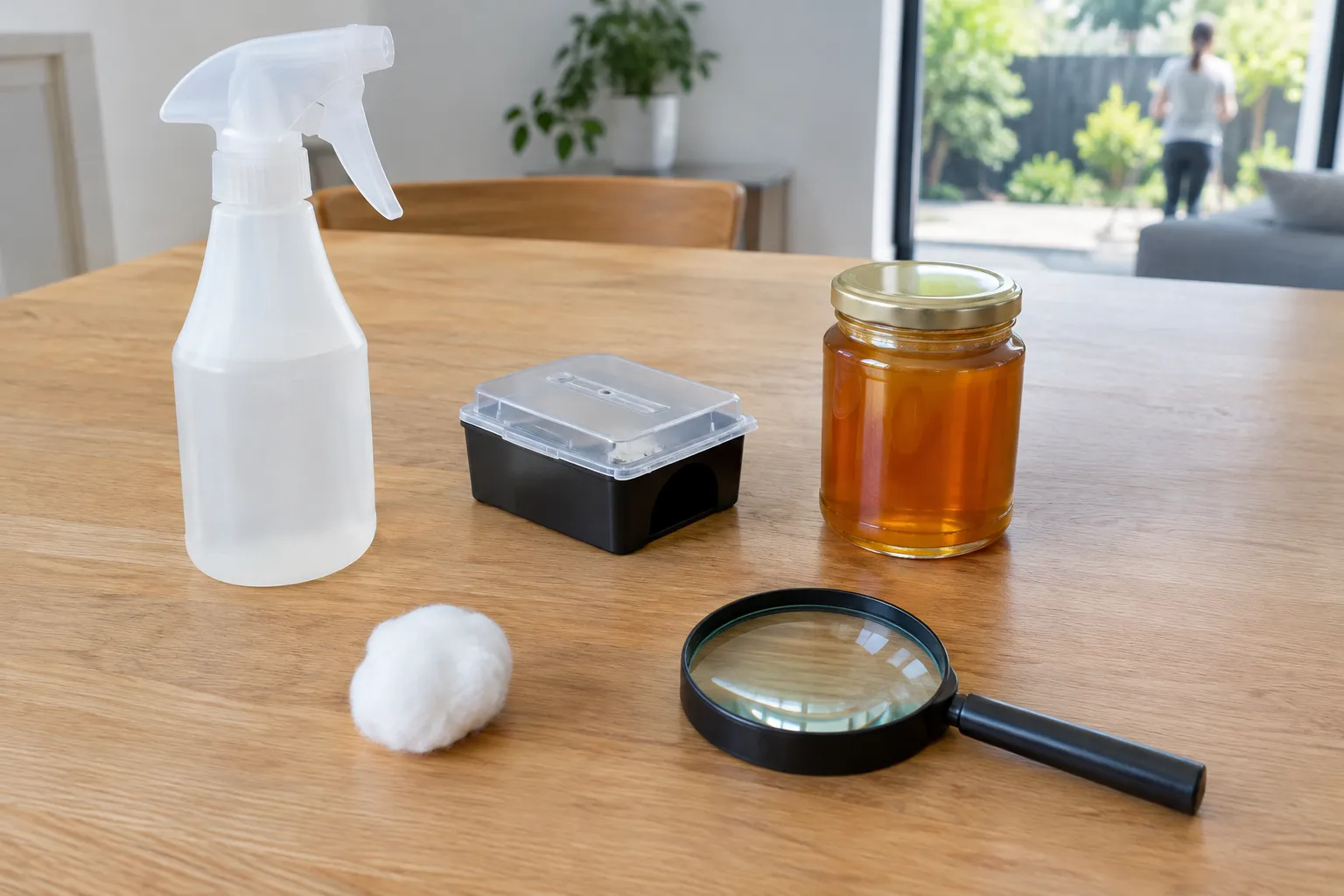
The best ant control is the one that reaches the nest of the ant you actually have. For a small trail of sugar ants, a sugar bait from the supermarket often does the job. For Argentine ants, the best results come from dense protein baiting with fipronil, repeated. For white-footed house ants in the walls, a professional treatment is usually the only thing that lasts. This page compares the options for ant control in Auckland side by side, so you can pick the right one, and lists the questions worth asking before you book a specialist.
What is the best way to get rid of ants in New Zealand?
The best way to get rid of ants in New Zealand is to identify the ant, then use a bait it will eat, laid densely beside its trails and left for one to two weeks. Keep food sealed and pet food away. For Argentine and white-footed ants, expect repeat treatments, and get a specialist in if baiting doesn't work.
Start by working out which ant you have. Watch the trail and look closely:
- Light honey-brown, in thick trails: probably Argentine ants. If it smells strongly when crushed, it's more likely Darwin's ant.
- Black with pale feet: white-footed house ants. Consumer NZ suggests a magnifying glass.
- Shiny black, 2 to 2.5 mm: possibly the black house ant, which Landcare says is not a major house pest in New Zealand.
Which ant control options work best?
Baits work best for most ants, because they reach the queens. Sprays work best only as a barrier after baiting, or as a non-repellent professional treatment. Natural remedies mostly repel ants rather than kill colonies. A professional treatment works best for wall-nesting colonies and large infestations of Argentine or white-footed ants.
| Option | Works on | Strengths | Limits |
|---|---|---|---|
| Sugar bait (boric acid) | Darwin's ant, black house ant, sugar-feeding ants | Cheap, easy, reaches the nest | Often ignored by Argentine ants. White-footed ants learn to avoid it |
| Protein fipronil bait | Argentine ants | Recommended by DOC and Landcare outdoors | Needs dense, repeated baiting. Keep away from waterways |
| Surface spray | Ants you can see | Instant clear-up of a trail | Doesn't reach the nest, can scatter colonies and stop baits working |
| Natural remedies (vinegar, citrus, cinnamon) | Trails | Low toxicity, clears scent trails | Repels for a while. Doesn't kill the colony |
| Professional treatment | All species, including wall nests | Identification, restricted non-repellent products, boundary treatment | Costs more. Ongoing plans for persistent species |
For product details and how to use them, see our ant bait guide.
Is DIY or professional ant control better?
DIY is better for a small, new trail of sugar-feeding ants that you can bait within a couple of weeks. Professional control is better when ants are nesting in the house, when they're white-footed ants, or when Argentine ants keep coming back after proper baiting. Many products that work best against these ants are for approved handlers only.
When DIY makes sense:
- a single trail into the kitchen or bathroom,
- ants that crowd onto a sugar bait,
- the problem is new and confined to one area.
When a professional makes more sense:
- ants are coming out of walls, ceilings or power points,
- the ants are white-footed house ants,
- you've baited properly for two to three weeks with no change,
- Argentine ants cover the whole section and the neighbours' too,
- you're a landlord, run a food business, or care for babies or vulnerable people.
Our page on ants in the house explains what a professional treatment involves.
What should you ask an ant control specialist before booking?
Ask what species they think you have, what they'll do on the first visit, which products they'll use and where, whether follow-ups or a warranty are included, and what you need to do before and after. A good answer explains how they'll reach the nest, not just how they'll spray.
Questions worth asking:
- Which ant is it, and how did you identify it?
- Will you treat inside, outside or both?
- Which products will you use? Ask for the names. Under New Zealand law, the most toxic pesticide categories can only be bought or used by an approved handler, as Growsafe explains.
- How do you deal with bait-shy white-footed ants?
- Is a follow-up visit included, and what happens if they come back?
- How long should children and pets stay off treated areas?
- What's the total price, including GST? Some businesses quote before GST and some after.
Compare at least two or three quotes. Our page on ant control cost lists published Auckland prices so you know what's typical.
Is it better to kill ants or let them be?
Outside, most ants do little harm in a garden, and leaving them alone is often fine. Argentine ants are different: they harm native birds, lizards and insects, farm aphids and scale on your plants, and Auckland's regional pest plan lists them for sustained control. Inside the house, it's usually better to deal with any ant colony.
Reasons to act even outdoors:
- Argentine ants spread to neighbours by budding and in pot plants.
- They protect sap-sucking insects, so your plants suffer.
- They can kill hatchlings in poultry runs and caged birds.
If you do treat outside, bait rather than spray, and keep fipronil bait at least 3 metres from any waterway.
Questions people ask
What is the best pest control for ants?
For most homes, the best pest control for ants is a bait matched to the species, placed densely beside trails and left to work. For Argentine ants, that's a protein fipronil bait. For white-footed ants nesting in walls, a professional treatment with non-repellent products usually works best. Sprays alone rarely solve the problem.
How long does ant control take to work?
Baits usually take one to two weeks to show a clear drop in numbers. Argentine ant colonies often need rebaiting after six to eight weeks. White-footed ants can take months of treatment. A surface spray works instantly on the ants it touches, but the colony keeps sending more.
What is the best ant killer in New Zealand?
There's no single best product. It depends on the ant. Sugar baits with boric acid suit many species. For Argentine ants, Landcare and the Department of Conservation recommend fipronil-based baits. White-footed house ants often avoid shop baits, which is why they're usually a job for a specialist.
How do I choose an ant control business in Auckland?
Get two or three quotes, ask each one how they'll identify the ant and reach the nest, which products they'll use, what's included in the price and whether a follow-up visit is part of it. Check the price includes GST. A clear plan is a better sign than the cheapest number.
Sources
- Consumer NZ: The best ways to get rid of ants in your home
- Department of Conservation: Argentine ants
- Manaaki Whenua Landcare Research: Argentine ant control tools
- Manaaki Whenua Landcare Research: Baiting operations
- Auckland Council (Tiaki Tāmaki Makaurau): Argentine ant
- Growsafe: Which certificate do I need
Last updated