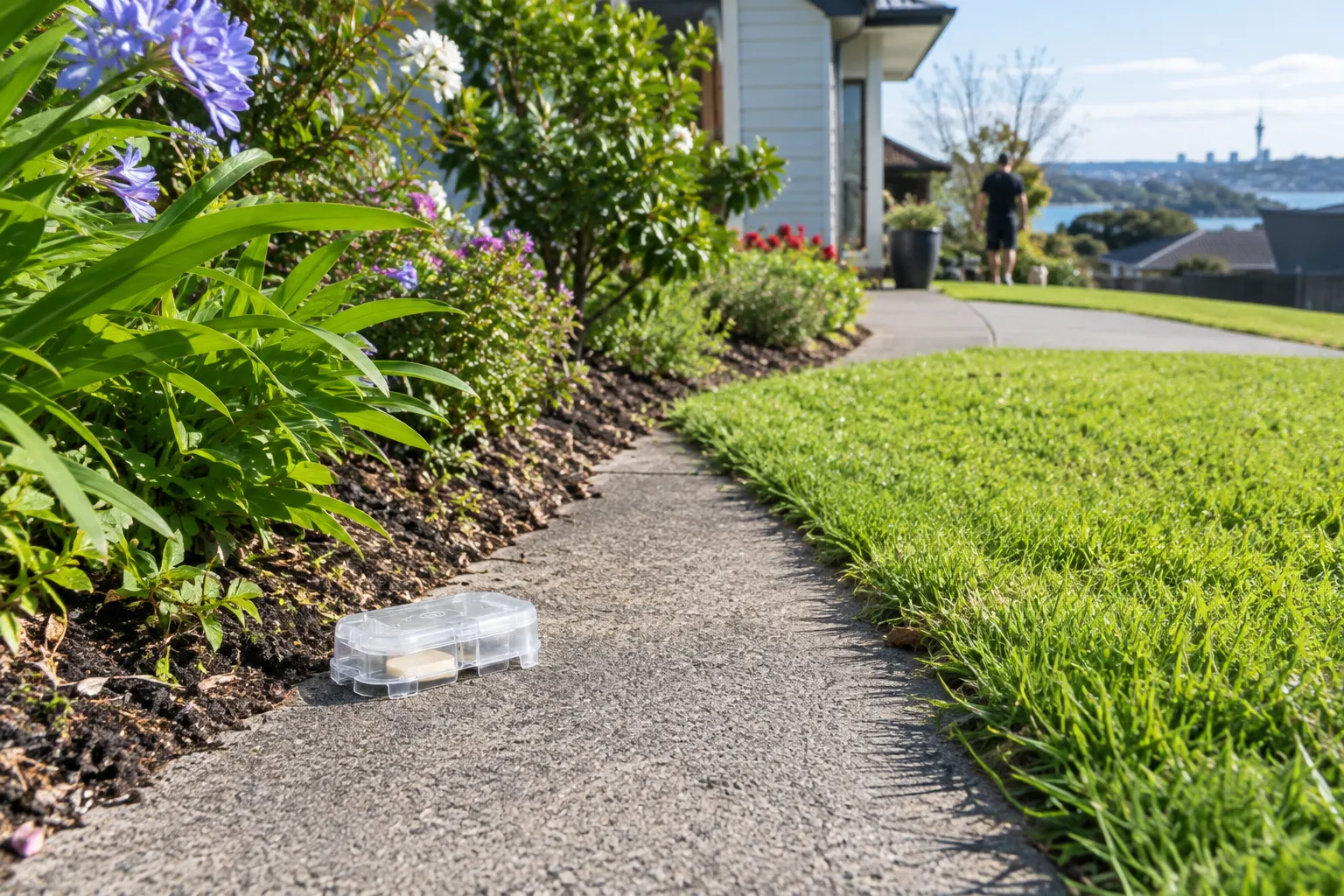
To get rid of ants for good, you have to kill the nest, not the ants on the bench. In Auckland that usually means a slow-acting bait the workers carry home to the queens, laid along their trails and left alone for days or weeks. Sprays and home remedies kill the ants you can see and leave the colony to send more. This guide sits under our main page on ant control in Auckland, and covers how to work out which ant you have, how to bait properly, which natural remedies are worth trying, and the point where a professional treatment makes more sense than another trip to the supermarket.
Why do ants keep coming back after you kill them?
Ants keep coming back because the workers you see are only foragers. The queens, eggs and larvae stay in the nest, often in a wall, under paving or in a garden bed, and the colony simply sends out more workers. Auckland's worst ants, the Argentine ant and the white-footed house ant, run many nests with many queens, so killing a trail barely dents them.
The two ants behind most Auckland call-outs are:
- Argentine ants (Linepithema humile): small, light honey-brown, moving in wide, busy trails. Their nests link up into super-colonies that can stretch for hundreds of metres. See our page on Argentine ants in Auckland.
- White-footed house ants (Technomyrmex jocosus): black or dark brown with pale feet, about 3 mm long. They nest in wall cavities, ceilings and subfloors and come inside for water and sweet food.
Consumer NZ suggests a simple test: put your hand on the trail. White-footed ants scatter. Argentine ants walk straight over it. Knowing which one you have matters, because the bait that works on one can fail on the other.
How do you get rid of ants permanently?
You get rid of ants permanently by poisoning the colony with bait, keeping food and water away from them, and dealing with neighbouring nests that would move back in. Permanent is a big word in Auckland: Manaaki Whenua Landcare Research notes that baiting one property often gives only a temporary break, because Argentine ants reinvade from untreated sections next door.
A method that works:
- Follow the trail. Watch where the ants go at the warmest part of the day. Trails lead to entry points such as gaps around pipes, window frames and skirting boards, and back towards the nest.
- Bait, don't spray. Put bait right beside the trail, not on it, and leave it. Ants need time to carry it back and feed it to the larvae and queens.
- Use enough bait. The Department of Conservation warns that too little bait gives some nests a sublethal dose, which can split the colony and make it harder to control.
- Hold off the sprays. Landcare advises putting down any residual insecticide at least a week after baiting, because sprays disrupt the colony and reduce how much bait the ants take.
- Repeat. For Argentine ants, Landcare's guideline is to bait again after six to eight weeks to catch survivors.
- Remove the reasons to visit. Wipe benches, seal food, fix dripping taps and pick up the pet food bowl at night. Consumer NZ notes Argentine ants are drawn to wet cat and dog food.
Do baking soda and sugar really kill ants?
There's no good evidence that baking soda and sugar kill an ant colony, and it's not a method any New Zealand authority recommends. The sugar attracts the ants, but baking soda is not a reliable insecticide. At best it kills a few foragers. The colony, its queens and its other nests carry on, so the trail is back within days.
The same goes for most kitchen remedies:
- Vinegar wipes away the scent trail, so ants lose their way for a while. It doesn't reach the nest. Treat it as a cleaning step, not control.
- Bleach poured on a nest kills what it touches and misses the rest. Argentine ant colonies have many nests and many queens.
- Boiling water on a visible nest in a path crack can kill part of it. It's no use on nests inside walls, and it risks scalds.
- Turmeric, cinnamon and coffee grounds may make ants detour around them. They don't kill the colony.
If you want a lower-toxicity option, a weak sugar and borax or boric acid bait is the one home recipe that works the way a real bait does. The ants carry it home. Keep it out of reach of children and pets: boric acid bait labels in New Zealand warn it is suspected of damaging fertility. If anyone swallows some, call the National Poisons Centre on 0800 764 766. More on recipes and products on our ant bait guide.
Which ant baits work on Auckland ants?
Fipronil-based protein baits work best on Argentine ants, and they're what the Department of Conservation and Landcare recommend outdoors. Sugar baits with boric acid work on many other ants. White-footed house ants are the hard case: Landcare notes baits often fail because workers don't share the bait, and Consumer NZ reports they learn to avoid it.
| Ant | What tends to work | What tends to fail |
|---|---|---|
| Argentine ant | Protein-rich fipronil bait laid densely along trails, repeated | Sugar-only baits, sprays on trails, one bait station on a window sill |
| White-footed house ant | Persistent baiting inside and out, often by a professional | Over-the-counter baits alone, spraying outdoor trails |
| Darwin's ant and black house ant | Sugar baits near trails, keeping food sealed | Repellent sprays that scatter the trail |
Landcare advises keeping fipronil bait out of drains and gutters and at least 3 metres from any waterway, because it is very toxic to aquatic life. Read the label every time. Some of the stronger products are for approved handlers only.
Can pest control get rid of ants?
Yes. A professional treatment is usually the fastest way to control Argentine or white-footed ants, because specialists can identify the species, bait the whole property and use non-repellent products that aren't sold to the public. Many products used against Argentine ants are approved-handler only. Expect ongoing control rather than a one-off fix for these two species.
Call a specialist when:
- you've baited properly for a few weeks and the trails are as busy as ever,
- ants are nesting inside walls, ceilings or the subfloor,
- the ants are white-footed house ants, which resist store-bought baits,
- ants are getting into electrical fittings, beds or food areas,
- you run a rental, a food business or a childcare space and need it done right first time.
Consumer NZ notes that a pest controller can only treat up to your boundary, and the result lasts longer when neighbours treat too. Our page on ant control cost covers what Auckland businesses charge, and the best ant control options compares DIY with a professional treatment side by side.
How do you get rid of ants indoors versus in the garden?
Indoors, the job is cutting off food and water and baiting beside the trails where they come in. In the garden, the job is baiting widely along fences, paths and garden borders, because outdoor nests are spread out and linked. Both matter: indoor ants nearly always come from outdoor nests, so treating only the kitchen rarely lasts.
For the inside of the house, our guide on how to get rid of ants in the house covers kitchens, bathrooms and walls in detail.
Outside:
- Put bait stations near trails on paths, fences, garden borders and rock walls, as the Department of Conservation suggests.
- Keep paste and gel baits out of direct sun, and refresh liquid baits.
- Check potted plants before you move them. Auckland Council suggests sitting a pot in water for two minutes to see if ants come out.
- Treat aphids and scale insects on plants, because Argentine ants farm them for honeydew.
Questions people ask
What is the fastest way to get rid of ants?
The fastest way to clear a trail is to wipe it with soapy water or vinegar and seal the food it was heading for. That gives you a clean kitchen today. It doesn't stop the colony. For lasting control, bait beside the trail and leave it for one to two weeks, or have a specialist treat the property.
Will bleach kill an ant nest?
Bleach kills the ants it touches, but it rarely kills a whole nest. Most nests run deep into soil, walls or paving, and Auckland's common pest ants have many nests and many queens. You also risk damaging plants and surfaces. Bait that the ants carry back to the queens is far more effective.
Does vinegar kill ant nests?
No. Vinegar removes the scent trail ants follow, so it can break up a trail for a few hours, but it doesn't kill the nest. Use it to clean benches after you've laid bait somewhere nearby, not on top of the bait, or the ants won't find it.
How can I get rid of ants in New Zealand naturally?
Start with hygiene: seal food, wipe benches, fix drips and move pet food. Seal the gaps where trails come in. A weak sugar and borax bait is the most effective low-toxicity option, used carefully away from children and pets. Natural repellents only move ants along. They don't remove the colony.
When is the best time to treat ants in Auckland?
Spring and early summer. Landcare says spring baiting, around early October, is now preferred for Argentine ants, because it hits the brood before new queens are produced. Ants also forage most actively between about 15 and 30°C, so warm, dry days are when they take bait best.
Guides in this section
- Ant bait
Which ant baits work on Auckland ants, sugar versus protein bait, home-made borax bait, bait stations, and why sprays can stop a bait…
- Ants in the house guide
How to get rid of ants in your house, kitchen and walls in Auckland.
Sources
Last updated