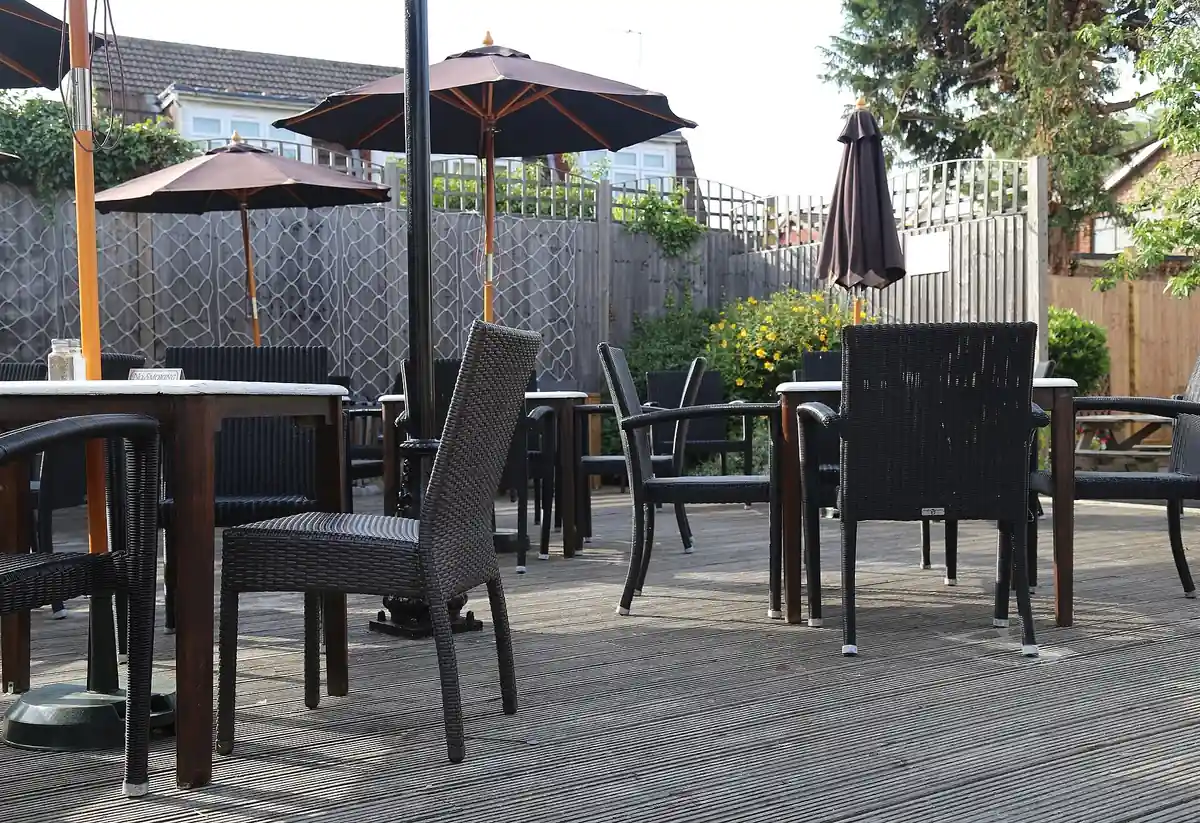

Ants found in a deck, a window frame or a wall stud in Auckland are usually living in timber that was already damp, decayed or hollowed out, rather than chewing through sound wood. A technician treats the ants, and the technician will also tell you plainly if the timber itself looks soft, wet or borer-damaged, because that needs a builder or a borer treatment as well. Treating the ants without fixing the moisture means they come back.
Are there carpenter ants in New Zealand?
"Carpenter ant" is the name for a group of large overseas ants known for excavating nests in wood. People search for them here after seeing ants in timber. Landcare Research lists New Zealand's 38 confirmed ant species, and the common household ones in Auckland, Argentine, white-footed, black house and Darwin's ants, are small species that nest in existing cavities rather than tunnelling sound timber.
So when ants are in your wood, the useful question isn't "which carpenter ant is this" but "why is this timber attractive to ants". The usual answers are moisture, rot, an existing void, or old borer galleries. That is general building experience rather than a published rule, which is why the technician looks at the wood as well as the ants.
Why ants choose damp or damaged wood
Ants look for sheltered, stable places to nest, close to food and water. Timber that stays damp softens and starts to decay, which makes it easy for ants to move into gaps and grain. Decks that sit close to the ground, window sills where water pools, bottom plates beside leaking showers and weatherboards behind overgrown gardens are the usual candidates.
Landcare Research records the white-footed house ant nesting in dry spots off the ground outdoors and in wall cavities, and other species use hollow stems, bark and old beetle tunnels. In Auckland's older villas and bungalows, untreated or older timber and plenty of small voids give ants many choices.
Signs the timber needs a look too
Some signs point to a timber problem, not just an ant problem, and are worth mentioning when you book. You don't need to diagnose them; just tell the technician what you've noticed.
- timber that is soft, spongy or crumbles when pressed with a key
- paint bubbling, flaking or stained around a sill or the base of a wall
- small round holes with fine powdery dust nearby (a sign of borer)
- a musty smell or visible mould in the sub-floor
- deck boards that flex, or joists that look dark and wet
## What the technician does
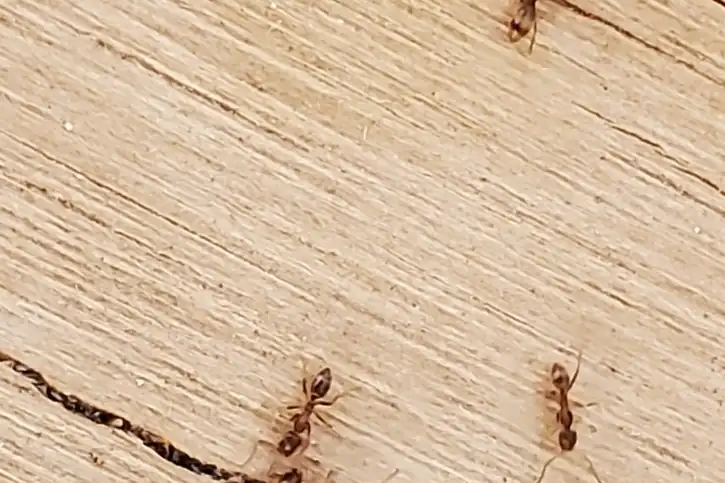
The technician treats the ants and reports on the wood. They trace trails to the timber, check whether the nest is in the wood itself or in a void behind it, identify the species, and look at the outside of the house and any deck or sub-floor. You get a written price for the ant treatment and an honest note of anything that looks like rot, leaks or borer.
Treatment typically combines bait on active trails, a non-repellent product around the base of the affected area and entry points, and, where the nest is in a void and the label allows, a product applied into that space through an existing gap. Decks are treated underneath along joists and bearers where ants travel, not by soaking the boards.
Decks and sub-floors
Decks are one of the commonest places for ant nests around Auckland homes. The space underneath is dry on top, damp below, sheltered from rain and often close to garden beds. Trails run along joists to the house and in under the door. Treating the deck alone rarely works; the trail into the house and the base of the wall need treating too.
Sub-floors in timber-floored homes are similar. Ants use bearers and piles as highways and enter through gaps in the floor. Good ventilation and a dry sub-floor make the area less attractive. The lawns, paths and pavers page covers the rest of the outside.
Window frames and wall framing
Ants trailing from a window frame usually mean either a nest in the frame where water has got in, or a nest in the wall cavity with the frame as the exit. Older timber joinery that has been painted over many times often has cracks behind the paint where moisture collects. Aluminium joinery in newer homes has drainage gaps that ants use as doors.
If ants come out at a wall or frame inside, the cavity is the likely nest. Nests in walls and ceilings explains how those are treated, and flying ants covers winged ants emerging from timber.
Fixing the cause
Ants come back to damp timber, so fixing the moisture is part of fixing the ants. That might mean a builder replacing a rotten sill or bottom plate, a plumber fixing a leak, clearing gardens and soil away from weatherboards, or improving sub-floor ventilation. Borer is a separate problem with its own treatment, and the technician will say so if they see signs of it.
You don't need to do the repairs before the ant treatment. Often it's better to clear the ants first so the builder can work without them. Just make sure the repair follows, or the ants will find the same spot next season.
What it costs
Ant treatment for a deck, frame or wall area usually falls within the published Auckland "from" prices: about $210 to $255 incl GST for one area or a small home, or about $340 to $400 incl GST for inside and outside of a typical three-bedroom home. Large decks and difficult sub-floor access add time. Timber repairs and borer work are separate and quoted by those trades.
Your ant treatment price is set in writing after the visit. See what ant control costs.
Ant control questions
Will ants destroy my deck?
The ants themselves don't. If the deck is soft, moisture and decay are doing the damage and the ants have moved in afterwards.
Can you treat borer at the same time?
This service arranges ant control. If the technician sees borer signs, they'll tell you so you can arrange a borer inspection.
Should I replace the rotten timber first?
Not necessarily. Clearing the ants first makes repairs easier, but the repair needs to follow.
Where these facts come from
Checked 5 November 2026