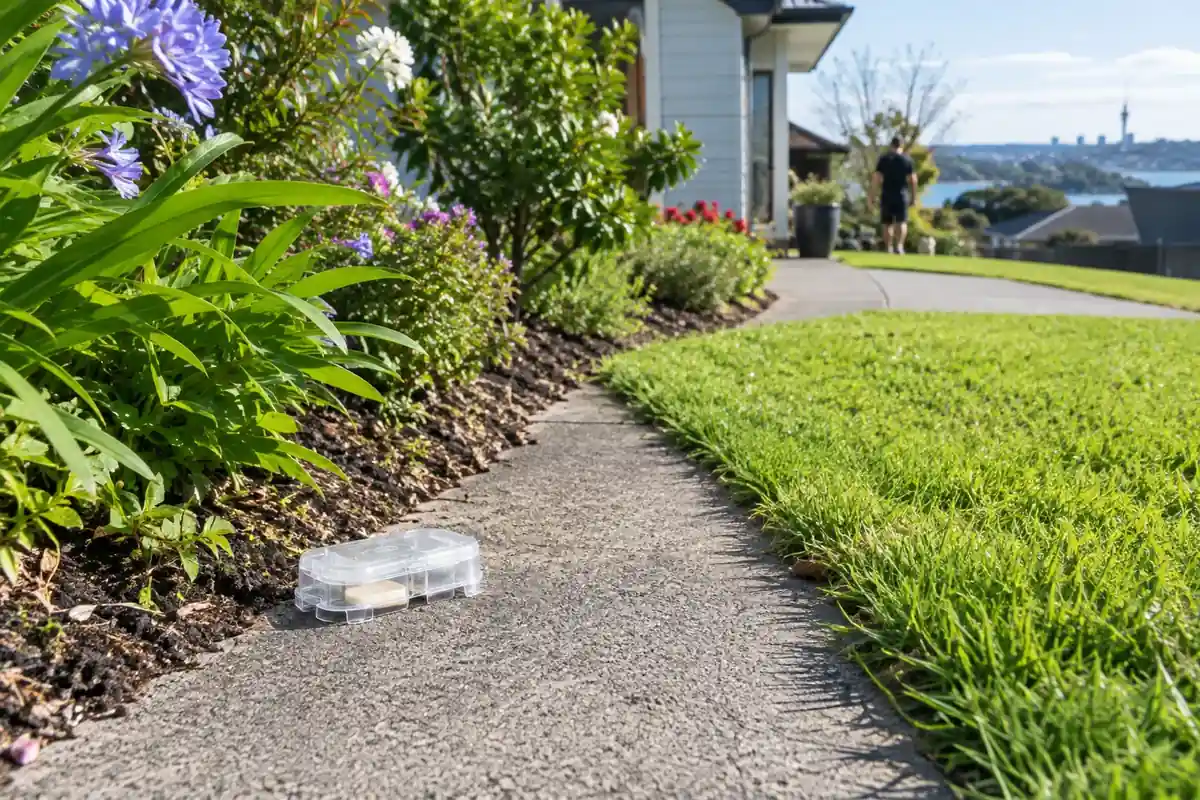
An ant treatment in a home with children or pets is set up so that products sit where they can't be reached: bait in sealed stations or deep in cracks, sprays only outside on entry points and allowed to dry, and nothing on floors, benches or toys. Every product is applied to its label directions, which include how long people and animals should stay off treated areas. Tell us about children, pets, fish, chickens and bees when you book.
Why "safe" depends on placement
Every pest product is designed to affect insects, and labels carry warnings for a reason. The protection for children and pets comes from where and how much product is used, not from a promise that it's harmless. A few dots of gel bait inside a crack behind the fridge expose a toddler to almost nothing. The same gel on an open skirting board is a different matter.
That's why technicians favour bait in closed stations and voids indoors, and keep sprays for outside entry points. It's also why you shouldn't put shop products on open surfaces in a home with small children; see shop products and labels.
Babies and toddlers
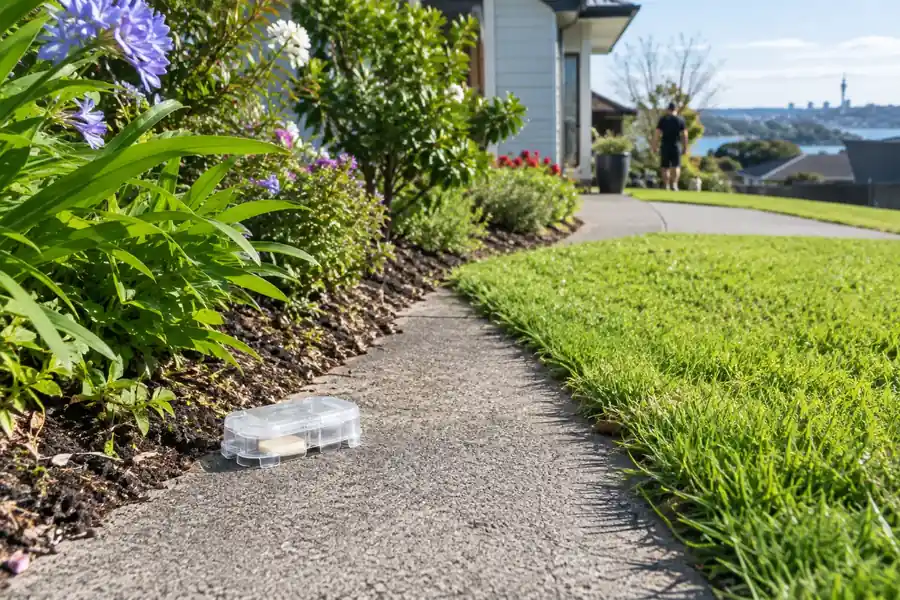
For homes with crawling babies and toddlers, the technician avoids any product at floor level that could be touched or mouthed. Bait goes into cracks above reach, inside cupboards with child locks, behind appliances, or into tamper-resistant stations. Outside, treated areas near the door and play areas are kept off-limits until the product has dried, as the label directs.
It helps to tell the technician where your child plays, crawls and naps. They can then plan placements around those areas, and show you each placement before they leave.
Dogs and cats
Dogs are the bigger worry, because they sniff and lick everything and will dig at a bait station. Technicians use stations dogs can't open, place them where dogs don't go, or use gel deep in cracks instead. Pets should be kept inside or away from treated outside areas until they're dry; the label gives the time.
Cats groom their paws, so outdoor treated surfaces they walk on matter. Keep cats in for the period the technician advises. Pet food bowls are an ant magnet; ants and pets has simple ways to protect them.
Fish, birds and other animals
Some insecticides are very toxic to fish and aquatic life. If you have an aquarium, a pond or a stream at the bottom of the section, tell the technician. Aquariums should be covered and air pumps turned off during any indoor application near them. Outdoor products are kept well away from ponds, streams and stormwater drains.
Indoor birds are sensitive to airborne products, so they should be moved to another room. Rabbits, guinea pigs and other caged pets should be kept away from treated areas.

Chickens and beehives
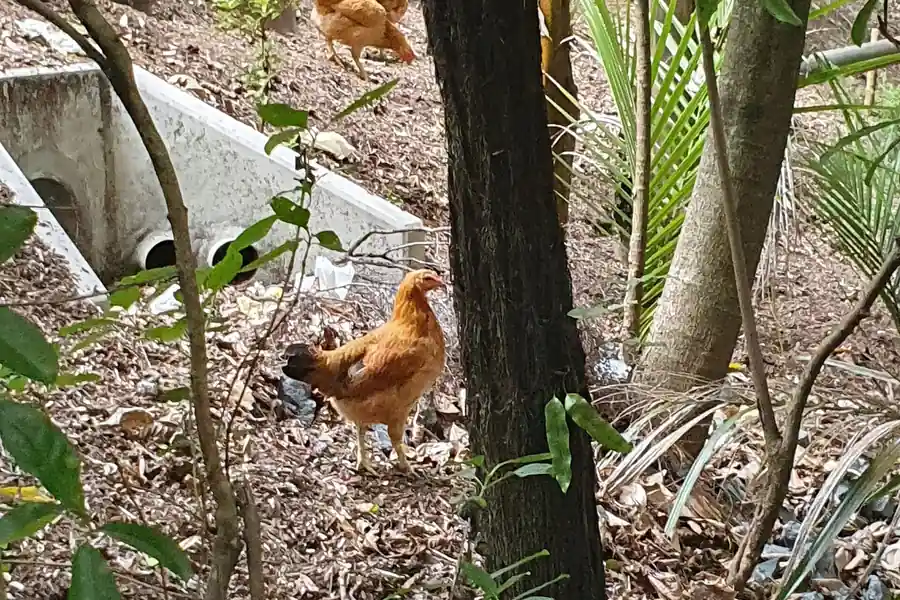
Backyard poultry and beehives need special care because Argentine ants affect both. Auckland Council lists Argentine ants as killing poultry hatchlings and robbing beehives. At the same time, many ant products are harmful to bees, so treatment near hives has to be careful: no spraying of flowering plants, products kept off hive stands, and bait placed where bees won't forage.
If you keep hens or bees, mention it when booking. Ants around chickens and beehives covers how to protect them during a bad ant season.
Vegetable gardens and fruit trees
Products are kept off vegetables, herbs and fruit that will be eaten. If ants are farming aphids on citrus or tending scale, the technician treats the ant trails up the trunk with bait or bands rather than spraying the tree. Ask what's been used near edible plants and follow the label's withholding advice if any applies.
What to ask the technician
You're entitled to know what's being used in your home. These are reasonable things to ask, and a good technician will answer them without fuss.
- What products will you use, and where exactly?
- How long should children and pets stay off treated areas?
- Can you use stations instead of open gel here?
- What should I do if my child or pet touches or eats some?
- Can I see the label?
If something is swallowed
If a child or pet swallows a pest product, act straight away. For people, ring the National Poisons Centre on 0800 764 766, free and available 24 hours, or 111 in an emergency. For animals, call your vet. Have the product name or label to hand.
What it costs
Setting up a treatment around children and pets doesn't usually change the price much; it changes where the products go. Published Auckland "from" prices run from about $210 to $255 incl GST for one area or a small home and about $340 to $400 incl GST for inside and outside of a typical three-bedroom home. Your price comes in writing after the visit.
Ant control questions
Are pet-safe ant treatments available?
Treatments can be set up to keep pets away from products, using stations and careful placement. No product is risk-free, so follow the re-entry advice.
Do we need to leave the house?
For bait and outside treatment, usually not. Follow the technician's advice for any indoor application.
Is natural ant control safer?
"Natural" products can still be toxic or simply not work. What makes a treatment safe is the right product, small amounts and good placement.
Where these facts come from
Checked 5 November 2026