Pet food draws ants because it's rich in protein and fat and sits on the floor all day. The quickest fixes are feeding set meals and lifting bowls afterwards, standing the bowl in a shallow tray of water so ants can't cross, moving it away from the trail, and storing dry food in sealed containers. If ants keep coming, the colony needs treating, set up so bait and sprays are where pets can't reach them.
Why pet food is so attractive
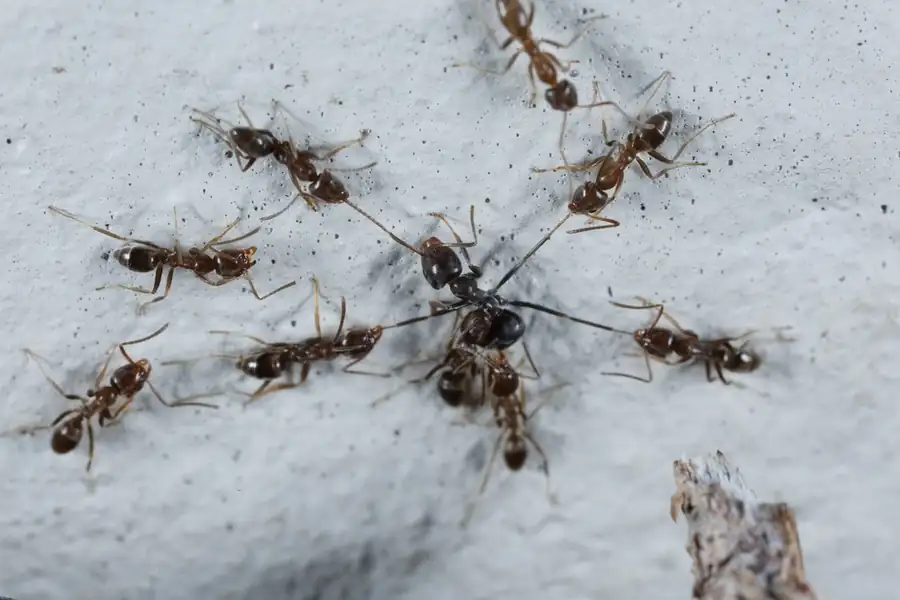
Argentine ants and many other species seek protein when they're raising brood, which in Auckland means spring and summer. Pet food, especially wet food and meaty biscuits, is concentrated protein and fat sitting at ant level. Landcare Research's Argentine ant work favours protein-based baits for exactly this reason: protein is what the colony is hungry for.
Water bowls attract ants in dry weather too. And spilled biscuits under the fridge or behind the laundry door keep a trail fed long after the bowl is washed.
Simple fixes for the bowl
Most ant problems at the pet bowl can be reduced without any product at all. Try a few of these together.
- Feed set meals and lift the bowl after 20 to 30 minutes rather than leaving food out all day.
- Stand the bowl in a wider, shallow dish of water, a "moat". Ants won't cross it. Change the water daily.
- Move the bowl away from walls and skirtings where trails run.
- Wash bowls and the floor underneath daily.
- Store dry food in a sealed plastic or metal container, not the open bag.
- Feed outdoor pets on a raised stand with legs in water, or bring the bowl in at night.
Products to keep away from pets
Shop ant products are a real risk around pets, especially dogs, which will chew through a bait station or lick a gel. Never put gel bait, liquid bait or granules on open floors where pets go. Never spray insecticide near bowls, bedding or pet doors. Cats are at risk from treated surfaces because they groom their paws.
If a pet eats an ant product, call your vet straight away and have the packet with you. For people, the National Poisons Centre is on 0800 764 766.
How a professional treatment works around pets
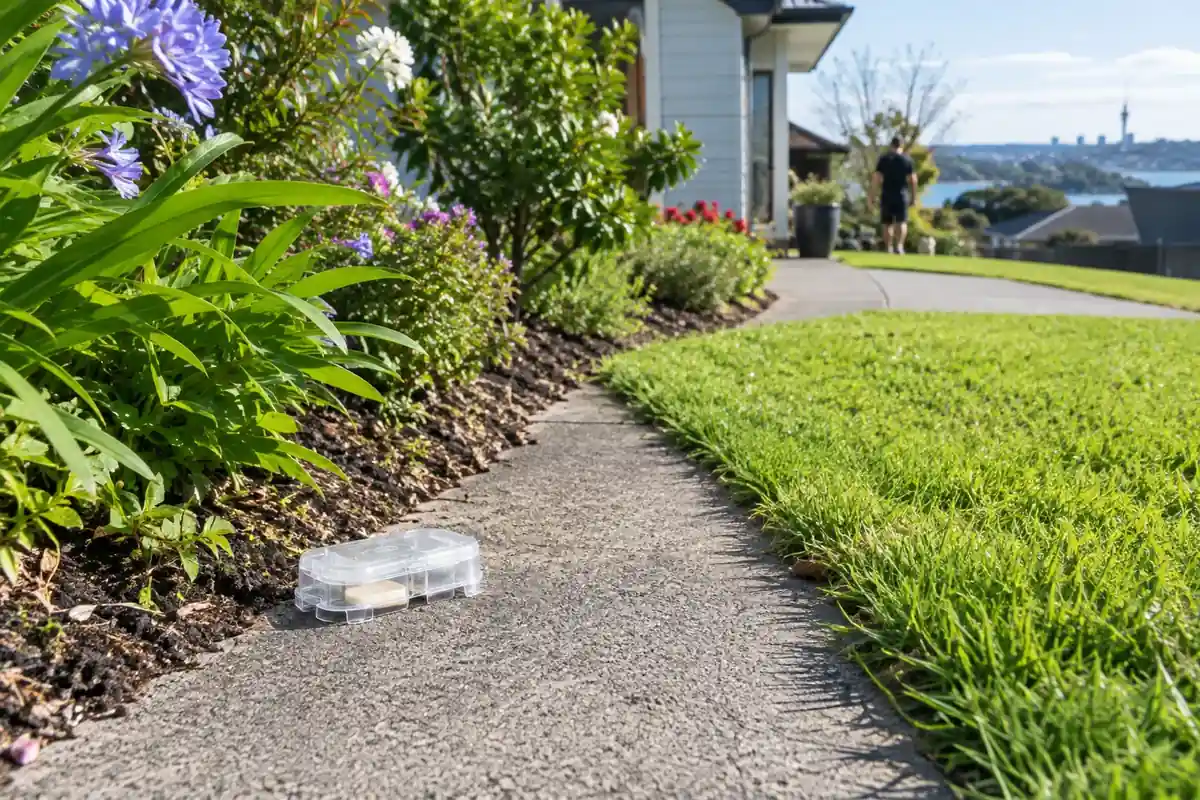
A technician sets the treatment up so products are out of pets' reach. Indoors, gel bait goes deep in cracks, behind appliances and inside cupboards, or into tamper-resistant stations. Outside, non-repellent products go on entry points and travel routes, and pets are kept off until dry. Tell the technician about every animal in the house when you book.
The detail is on pet and child safe treatment. Published Auckland prices for one area or a small home start at about $210 to $255 incl GST, and inside and outside of a typical three-bedroom home at about $340 to $400 incl GST.
Pet doors and kennels
Pet doors are ant doors. Trails often run under or around the flap, and kennels and pet beds near the house can shelter nests underneath. Lift kennels off the ground on bricks or a frame, keep bedding clean and dry, and check under them when ants are about. Avoid spraying around pet doors; the technician will treat the outside wall nearby instead.
Fish tanks, birds and small animals
Aquariums need covering and the air pump turned off during any indoor application nearby, because some insecticides are very toxic to fish. Caged birds should be moved to another room, since they're sensitive to airborne products. Rabbits, guinea pigs and other small animals should be kept away from treated areas.
Chickens and bees
Backyard hens and beehives are a different case, because Argentine ants affect them directly. Auckland Council lists Argentine ants as killing poultry hatchlings and robbing beehives. See ants around chickens and beehives.
After a treatment
After a treatment, keep pets away from treated areas for as long as the technician advises, usually until outside products have dried. Keep feeding on a moat or set-meal routine for a while so the ants are drawn to the bait rather than the bowl. Don't wash away bait placements, and tell the technician if a pet disturbs a station.
Ant control questions
Is it safe to use a bait station with a dog in the house?
Only if the dog can't reach or chew it. Tamper-resistant stations placed out of reach are the safer option.
Will ants hurt my pet?
Auckland's common house ants don't sting pets. The risk is mainly to the food, and to pets from ant products.
Can I put the bowl outside instead?
You can, but outdoor bowls attract ants too. Raise them on a stand with legs in water.
Where these facts come from
Checked 5 November 2026