
In Pukekohe and the wider Franklin area, ant treatments are shaped by land use more than housing. Town sections in Pukekohe and Waiuku are treated much like suburban Auckland homes, but lifestyle blocks and rural properties add sheds, water tanks, chicken coops, beehives, orchards and long driveways. Treatment concentrates on the house and the area immediately around it, not the whole block, and travel is confirmed before booking.
Volcanic soils and market gardens
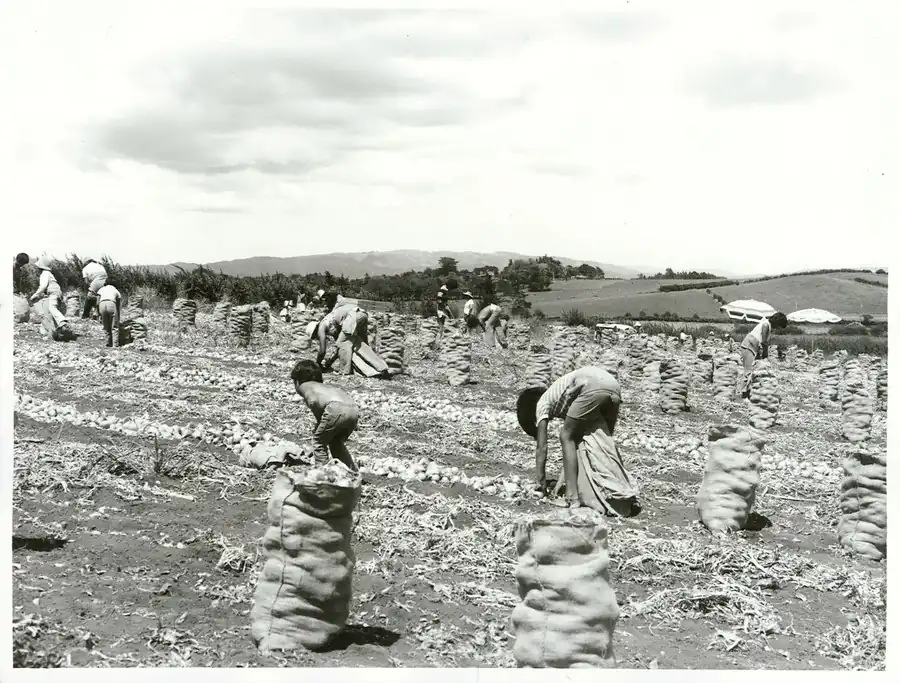
Pukekohe Hill and the surrounding area have deep, fertile volcanic soils that have supported market gardening for over a century. Onions, potatoes and leafy greens grown here supply much of the North Island. Rich soil means plenty of insect life, including ants, and the movement of soil, produce bins and equipment between properties is part of everyday rural work.
Auckland Council's pest plan bans distributing Argentine and Darwin's ants anywhere in the region. On rural properties, that's a practical reason to check soil, bins, pallets and equipment before moving them, and to source landscaping materials carefully.
Lifestyle blocks: house first
On a lifestyle block, treating every ant on the property is neither possible nor sensible. The goal is keeping ants out of the house, the coop, the hives and the sheds that matter. A technician treats the house perimeter, paths, decks and any outbuildings close to the house, and places bait stations at key points. Paddocks and bush are left alone.
Sheds, garages and stored gear
Sheds full of stored timber, feed bags, firewood, garden supplies and machinery are prime nest sites. Feed bags and spilled grain feed colonies. Trails then run from the shed to the house. Storing feed in sealed bins, keeping firewood off the ground and away from the house, and tidying shed floors all help.
Water tanks and pumps
Many Franklin homes rely on rainwater tanks. Ants nest around tank bases and pump housings, where it's dry and warm, and they can get into pump boxes and electrical controls. Products are never applied near tank inlets, overflows or anything that could reach drinking water. Keep tank lids sealed and screens intact.
## Poultry and bees
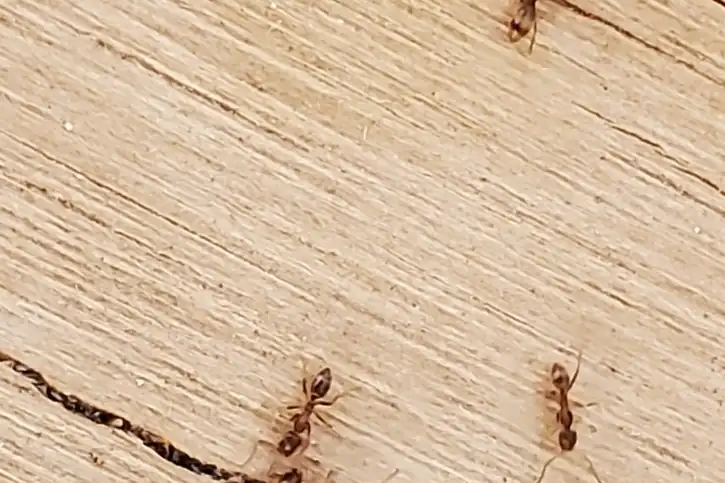
Backyard flocks and beehives are common out here. Auckland Council lists Argentine ants as killing poultry hatchlings and robbing beehives. Coops on legs with ant barriers, sealed feed, and bait stations placed where hens and bees can't reach them help. Many insecticides are toxic to bees, so treatment near hives avoids flowering plants and hive stands. See ants around chickens and beehives.
Town sections in Pukekohe and Waiuku
In town, Pukekohe has older villas and bungalows near the centre, post-war homes and a growing number of new subdivisions on its edges. Waiuku has a similar mix. Town homes are treated like suburban homes: inside on trails and around the outside walls, paths and garden beds.
Orchards, vineyards and crops
Commercial growers have their own pest management programmes, and crop protection is outside this service. Where an orchard or garden surrounds a home, the house and immediate grounds can be treated, with products kept off crops and away from flowering plants and bees.
When to book
Rural properties often see ants surge in spring as gardens and crops grow and honeydew-producing insects build up. A spring treatment of the house and outbuildings, before the November to March peak, makes the summer easier. Landcare found spring baiting around early October works as well as summer baiting. See seasonal ant programme.
Travel and price in Franklin
Franklin is at the southern edge of the region, so rural addresses here can carry a travel charge, which is confirmed before anything is booked. Town sections in Pukekohe usually don't. The work itself is priced like anywhere else in Auckland, starting around $210 to $255 incl GST for one area and around $340 to $400 incl GST for inside and outside of a typical three-bedroom home, with outbuildings and long perimeters adding time.
Ant control questions
Do you treat whole lifestyle blocks?
No. Treatment focuses on the house and nearby buildings. Paddocks and bush are left alone.
Is it safe near my water tank?
Products are kept well away from tanks, inlets and anything that could reach drinking water.
Can you treat around my beehives?
With care: bait stations away from hives, no spraying of flowering plants. Tell us where the hives are.
Where these facts come from
Checked 5 November 2026