Argentine ant control works when it targets the whole network of nests around a property rather than the trail on the bench. A technician treats the boundary and the places ants enter with products the ants carry home, places protein-based bait where they feed, and comes back after a few weeks to deal with nests that budded off in the meantime. Done in spring or early summer, it keeps a house clear through the November to March peak.
How to tell it's an Argentine ant problem
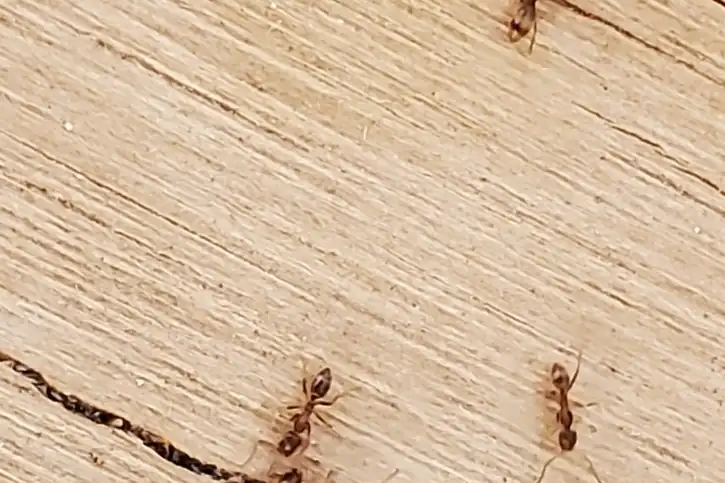
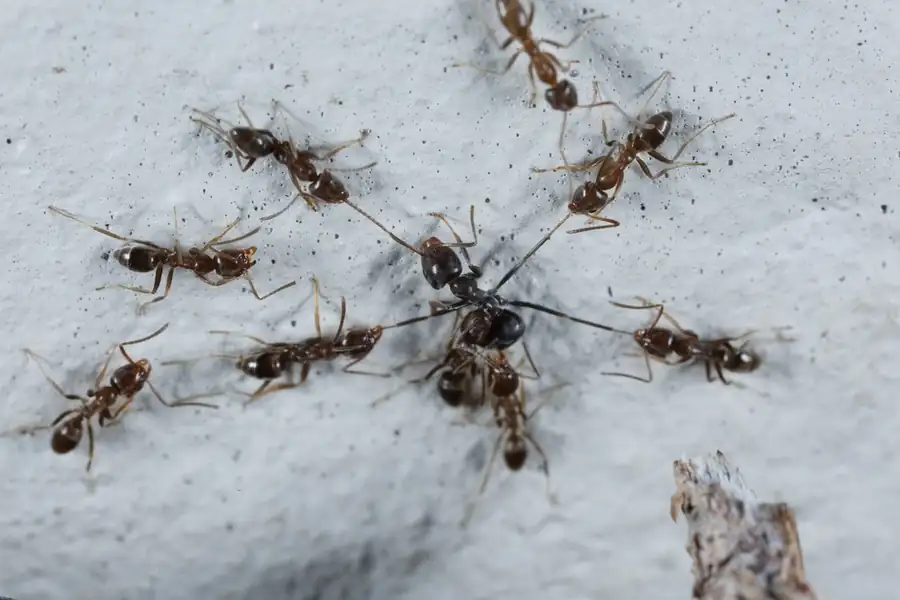
Argentine ants are small, about 2 to 3 mm, and an even light to mid brown with no shine. They run in long, steady, two-way trails that can stretch from the bench out the door and across the section. They don't sting, and they don't have the strong smell of Darwin's ant when crushed. If a trail reforms within hours of wiping it, Argentine ants are the usual reason.
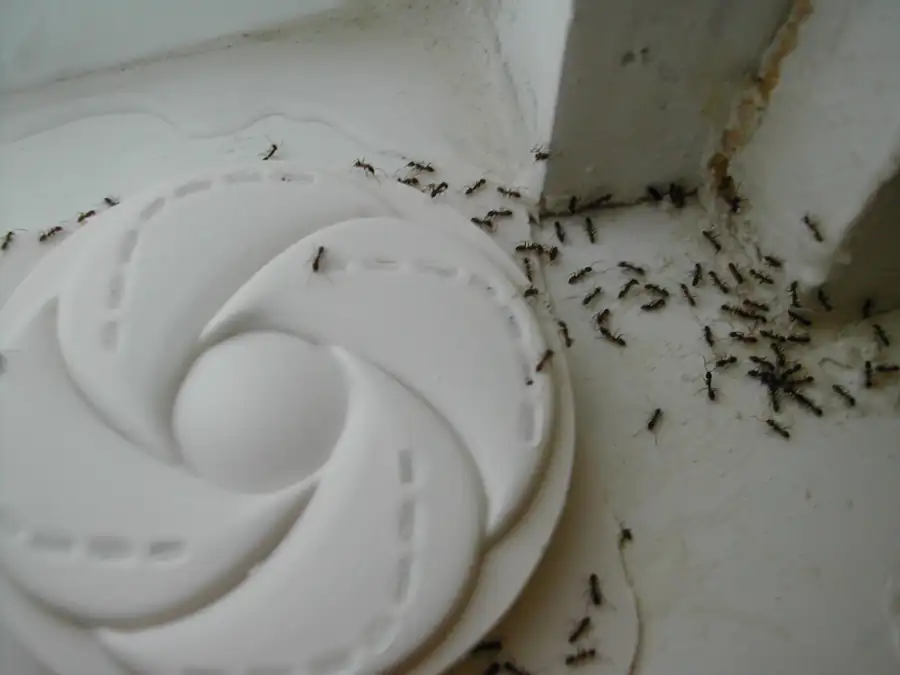
The other giveaway is scale. A white-footed or black house ant problem is usually centred on one room or one wall. An Argentine ant problem tends to involve the garden, the paths, the fence line and sometimes the neighbours' sections too. Workers are aggressive towards other ants, so a property with Argentine ants often has few other species. If you're unsure, telling house ants apart covers the field marks.
Why the usual fixes fail on this species
Shop products fail on Argentine ants because the colonies are built to survive losses. Landcare Research describes nests with many queens that split off new nests nearby when conditions change, a process called budding. Kill one nest with a spray and the neighbouring nests carry on, often closer to the house than before. Repellent sprays also break up trails, which can push ants into wall cavities.
Two other things work against DIY. Landcare Research's work on controlling Argentine ants favours protein-based baits, while most shop gels are sugar-based, so a gel that seemed to work one month can be ignored the next. And they travel along concrete paths and driveways, which Landcare calls ant highways, where surface sprays break down quickly in sun and rain.
What the technician does on the visit
The visit starts with the outside, because that is where the colony is. The technician walks the boundary, the paths, the fence line, the deck edges and the base of the walls, following trails to where they go underground or into the building. Inside, they check the kitchen, bathrooms, laundry and any wall the ants come out of. Then they explain what they found and price the work in writing.
- Entry points. A non-repellent product goes at the base of walls, weep holes, cable and pipe entries, door thresholds and where paths meet the house.
- Travel routes. Path edges, fence lines, the edges of decks and retaining walls get the same treatment, so ants pick up product as they move.
- Bait where they feed. Protein or protein-and-sugar baits go into stations or cracks on active trails, inside and out.
- Advice. You'll be told what not to clean, where not to water for a day or two, and how long to keep pets off treated ground.
The follow-up visit
A second visit after a few weeks is standard on Argentine ant jobs, and you should expect it to be discussed in the quote. The first treatment knocks out the active trails and most of the nearby nests. Budded nests, new trails from neighbouring sections and nests the ants moved into after the first visit are picked up on the second.
Ask before agreeing whether the follow-up is included in the price, and how soon it happens. Landcare's own work found that baiting in spring, around early October, works as well as summer baiting, so a first visit in October and a follow-up in November sets a property up well for the season. More on timing in how long treatment takes.

Why your neighbours matter
Argentine ant nests on neighbouring sections behave like one large colony, so a single house treated in the middle of a heavily infested street will see ants test its boundary all summer. The treatment still works, but the outside barrier has to be maintained. Where several neighbours treat at the same time, results last much longer and follow-ups are often lighter.
If you're on good terms with next door, it's worth mentioning. Shared fences, hedges and retaining walls are where trails cross, and treating both sides of the same fence is far more effective than one. Body corporates and terraces are covered on apartments and body corporate buildings.
Argentine ants and the rules in Auckland
Auckland Council's Regional Pest Management Plan lists the Argentine ant for sustained control across the region and bans anyone from breeding, distributing, releasing or selling it. In the Hauraki Gulf Controlled Area, moving Argentine ants to or between islands is an offence. Householders aren't required to treat their own sections, but moving infested soil or plants isn't allowed.
In practice that means: don't give away pot plants, mulch, compost or soil from a property with Argentine ants without checking them, and check gear and boxes carefully before heading to an island. Council's advice is to submerge pot plants in water for two minutes to flush out ants. See moving plants and soil and Hauraki Gulf islands.
Book before the summer peak
The best time for an Argentine ant treatment is spring, before numbers climb. Landcare found these ants forage most between about 10 and 30°C, with activity peaking in mid-summer and lowest in winter. From November, colonies are growing fast and every pest controller in Auckland is busy, so a booking made in late October or early November usually gets a visit sooner and a better result.
If you're reading this in the middle of summer, it's not too late. Treatment still works; it may simply need the follow-up sooner. A yearly spring treatment is covered on seasonal ant programme, and the history of the species here is in Auckland's Argentine ant story.
What Argentine ant control costs
Auckland pest control businesses publish "from" prices of about $340 to $400 incl GST for inside and outside of a typical three-bedroom home, which is the usual scope for an Argentine ant job. One area or a small home starts at about $210 to $255 incl GST. Your price is set in writing after the visit and depends on the size of the section and whether a follow-up is included.
Larger sections, long fence lines, decks, sheds and retaining walls add time. Ask whether GST is included and what the follow-up costs. The full comparison is on what ant control costs.
Ant control questions
Will Argentine ants come back after treatment?
From the house, usually not for the season, if the outside is treated and the follow-up is done. From the street, they may test the boundary again next spring, which is why many people book a yearly spring treatment.
Are Argentine ants harmful?
They don't sting people and aren't known to carry disease, but Auckland Council lists them as a pest because they harm native insects, protect aphids and scale on plants, rob beehives and can kill poultry hatchlings.
Can I just treat the inside?
You can, but the colony lives outside. An inside-only treatment usually buys a few weeks before new trails arrive.
Do I need to be home?
Someone needs to let the technician inside and talk through what they find. Outside work can sometimes be done with gate access only.
Where these facts come from
Checked 5 November 2026