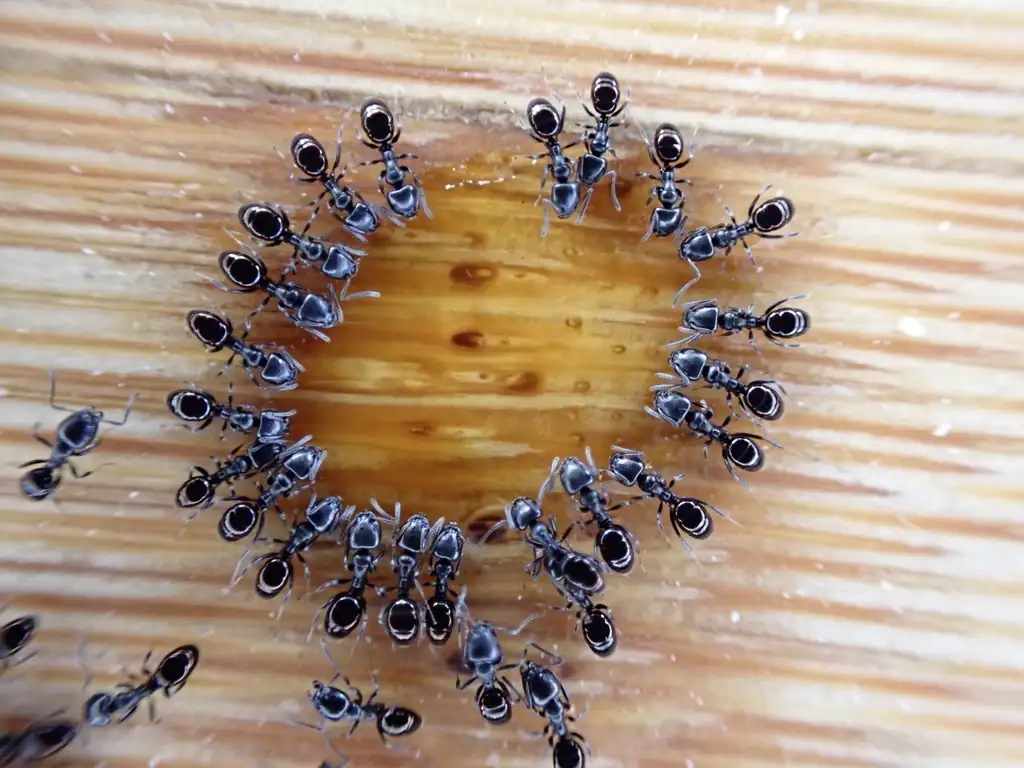
Most indoor ants in Auckland are one of four introduced species: the Argentine ant (light brown, long busy trails), the black house ant (shiny jet black), the white-footed house ant (black with pale feet, often coming out of walls) and Darwin's ant (small, brownish, smells strongly when crushed). Colour, the feet, the smell and the way the trail behaves are usually enough to narrow it down without a microscope.
Why the species matters
Each of these ants nests in different places and takes bait differently, so a product that clears one can fail against another. Argentine ants need treatment across the boundary because their nests connect. White-footed house ants need generous bait close to where they feed because, as Landcare Research notes, their workers don't share food. Black house ants usually take bait well.
Knowing which you have also tells you whether to worry about the walls, the garden or the neighbours. A technician identifies the species on the first visit, but a good description over the phone helps plan it.
The four common indoor ants at a glance
| Ant | Colour and size | Trail | Other clues |
|---|---|---|---|
| Argentine ant | Even light to mid brown, 2 to 3 mm | Long, fast, two-way, often from the garden | No smell; very busy; few other ants nearby |
| Black house ant | Shiny jet black, small | Thin, steady, along edges and frames | No pale feet; takes bait well |
| White-footed house ant | Black, small, pale lower legs | Around sinks, power points, wall tops | Lives in wall cavities in large numbers |
| Darwin's ant | Brownish, darker head, 2 to 5 mm | Trails like Argentine ants | Strong smell when crushed |
Argentine ant
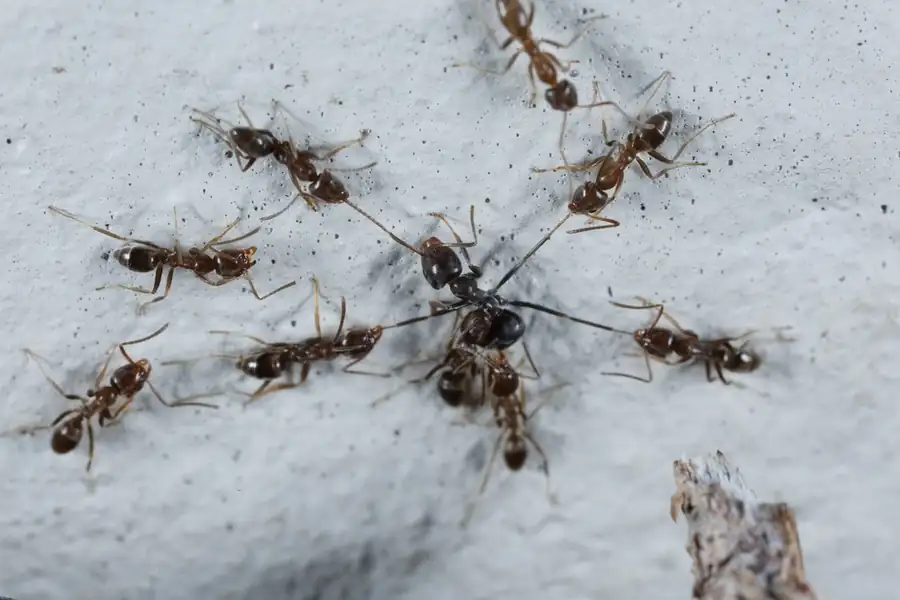
The Argentine ant is the one most Aucklanders know, even if they don't know its name. Landcare Research describes workers as 2 to 3 mm long and uniformly light brown. The giveaway is behaviour: long, steady, two-way trails that can run from the bench, out under the door, across the path and along the fence. Wipe the trail and it reforms within hours.
Argentine ants are aggressive towards other ants, so a property with a heavy infestation often has few other species. They don't sting people. Queens are larger and darker, about 10 to 12 mm according to Auckland Council, but you'll rarely see one. See Argentine ant control.
Black house ant
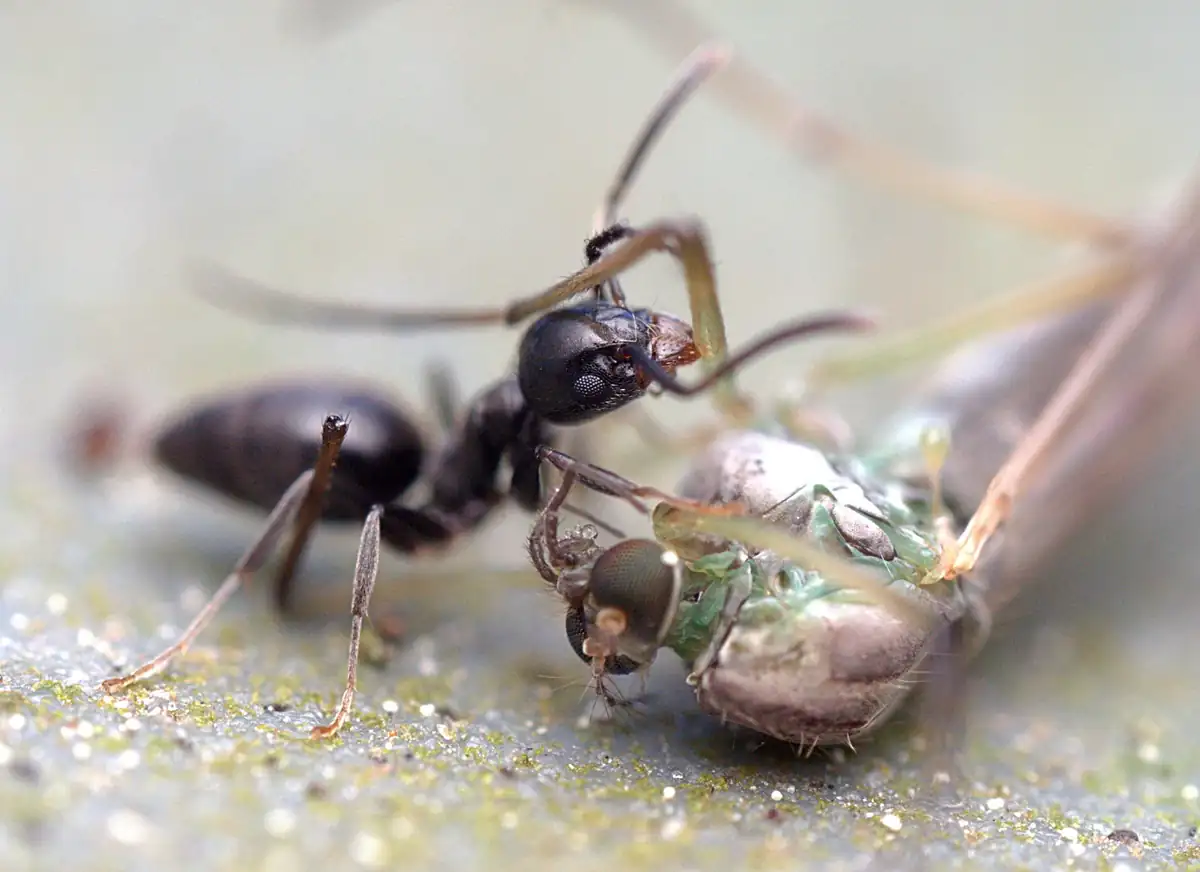
Black house ants are small, shiny and uniformly jet black, including the legs. They move in thin, unhurried trails along the edges of benches, window frames and skirtings. Landcare's records trace the species to Australia, with the first New Zealand record in 1927. It nests outdoors and in buildings, in walls, ceilings and sub-floors.
The quick test against white-footed ants is the feet: black house ants have dark legs all the way down. They're generally one of the easier species to clear with bait. See black house ant treatment.
White-footed house ant
White-footed house ants are small and black or very dark brown, with noticeably pale or whitish lower legs and feet. You may need a phone camera on zoom to see it. Landcare Research records them nesting in dry spots off the ground outdoors and in wall cavities of buildings, where they can reach very high densities.
Typical signs are ants appearing at power points, light switches, the top of a wall, around window frames and in bathrooms, rather than in a trail from outside. Baits often fail on this species unless used generously and close to feeding sites. See nests in walls and ceilings and ants in power points.
Darwin's ant
Darwin's ant is small, 2 to 5 mm according to Auckland Council, with a darker head and a paler body. It looks a lot like the Argentine ant at a glance. The reliable test is smell: crush one between your fingers and Darwin's ant gives off a strong odour. Argentine ants don't.
Darwin's ants nest mostly in soil in gardens, under paving and around plant roots, and come indoors in trails. Like Argentine ants, they're listed in Auckland's pest plan. See Darwin's ant treatment.
Ants that are usually not the problem
New Zealand has 38 confirmed ant species, 11 of them native. Most natives live in bush, soil and leaf litter and rarely come inside. If you live by bush and see a few unfamiliar ants on the deck, they may be natives that will wander off. Native ants worth leaving alone covers them.
The one ant you must not treat yourself is a suspected fire ant: small, reddish-brown, stinging painfully, with loose soil mounds. Report it to MPI on 0800 80 99 66. See fire ants: what to do.
How to take a useful photo
A clear photo helps a technician plan the visit. Put a coin or ruler next to the ants for scale, get as close as your phone allows in good light, and take one shot of the trail as a whole showing where it starts and ends. If you're unsure about the feet, a zoomed shot of a single ant from the side helps. Keep a few ants in a sealed bag in the freezer if you can.
Ant control questions
Can two species be in the same house?
Yes, especially a garden species outside and a wall-nester like white-footed ants inside. Each may need treating differently.
Are small red ants in the garden fire ants?
Almost always not. But if they sting painfully and build loose soil mounds, report them to MPI on 0800 80 99 66.
Do I need to know the species before booking?
No. Describe what you see; the technician confirms the species on the visit.
Where these facts come from
Checked 5 November 2026