

Most ant work around Papakura, Takanini and Drury is in new or newish homes on concrete slabs, in subdivisions built on former farmland, with a smaller share in Papakura's older timber houses. The new streets get ants through earthworks, imported landscaping and unsealed gaps; the older ones through sub-floors and gardens. Takanini's soft, damp ground and the inlet edges add a wet-weather twist.
A growth corridor built on farmland
Takanini, Hingaia, Karaka and Drury have been among Auckland's fastest-growing areas, with large subdivisions replacing paddocks and new town centres along the motorway and rail line. Thousands of homes went up on slabs with paved paths, fenced courtyards and landscaped berms. Much of the soil, mulch and planting came from elsewhere.
Landcare Research notes that most Argentine ant spread comes from people moving them in soil, plants and materials. A new subdivision is a place where all three arrive at once. Colonies disturbed by earthworks also look for new shelter, and new houses provide it.

Takanini's soft ground
Parts of Takanini sit on peat, which is soft, compressible and holds water. That's why some local buildings needed special foundations. For ants, damp ground matters in two ways: nests sit close to the surface and flood easily after heavy rain, sending colonies indoors, and damp conditions around foundations make some homes attractive in dry spells.
Wet-weather surges are common here. If a trail appears the morning after a storm, it may settle back outside within days; if it doesn't, the colony has moved in. See ants after rain.
Older Papakura
Papakura itself is an older town, with villas, bungalows and post-war state houses around the centre and towards Red Hill and Pahurehure. Timber homes on piles have sub-floors and weatherboards with plenty of gaps. Gardens are bigger, often with fruit trees and vegetable plots. Trails come in from the garden, under the floor and up into kitchens and bathrooms.
The Pahurehure Inlet edge
Homes in Pahurehure, Conifer Grove and around the inlet have sections near reserves and the water. Products are kept back from the inlet, stormwater drains and reserve boundaries, and the treatment focuses on the house, paths and the garden beds closest to the walls.
Darwin's ants in new gardens
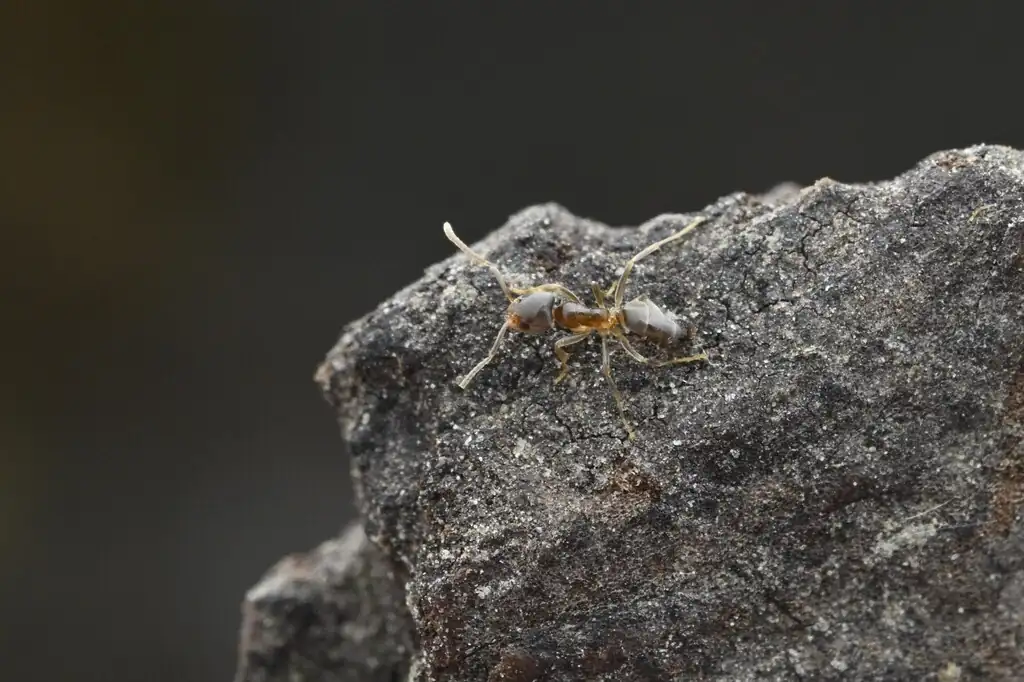
Darwin's ant, a small Australian species listed alongside the Argentine ant in Auckland's pest plan, nests in garden soil and around plant roots. New gardens planted from nursery stock and fresh topsoil are a likely place for it to turn up. It looks like a small Argentine ant but smells strongly when crushed. See Darwin's ant treatment.
## What to check in a new home
- trails along the slab edge and into the garage
- the bottom of sliding door tracks and window corners
- gaps around heat pump lines, outdoor taps and the meter box
- garden beds and bark hard against the cladding
- pot plants and new shrubs near doors
Once the ants are treated, sealing service penetrations and keeping mulch back from the cladding make a repeat less likely. If the gaps should have been sealed in the build, raise it with your builder.
Commuter households
Many people here commute long distances, so weekday access can be tricky. Outside work can sometimes be done with gate access while you're away, and a Saturday morning visit may suit a full inspection. Mention access when booking.
Cost and travel south
Papakura, Takanini and Drury are inside the normal travel area. A new three-bedroom home on a compact section is often a straightforward inside-and-outside job, which Auckland pest controllers list from roughly $340 to $400 incl GST. Single-area work starts at about $210 to $255 incl GST. Larger older sections in Papakura can take longer, and the written quote will reflect it.
Ant control questions
Why does a brand-new house have ants?
Disturbed colonies, imported soil and plants, and unsealed gaps. It's common in new subdivisions.
Do ants come inside more after rain here?
On soft, damp ground, nests flood easily, and colonies move up and indoors. It's often short-lived.
Will ants damage my foundations?
No. Ants don't damage concrete. They use the slab edge as a route.
Where these facts come from
Checked 5 November 2026