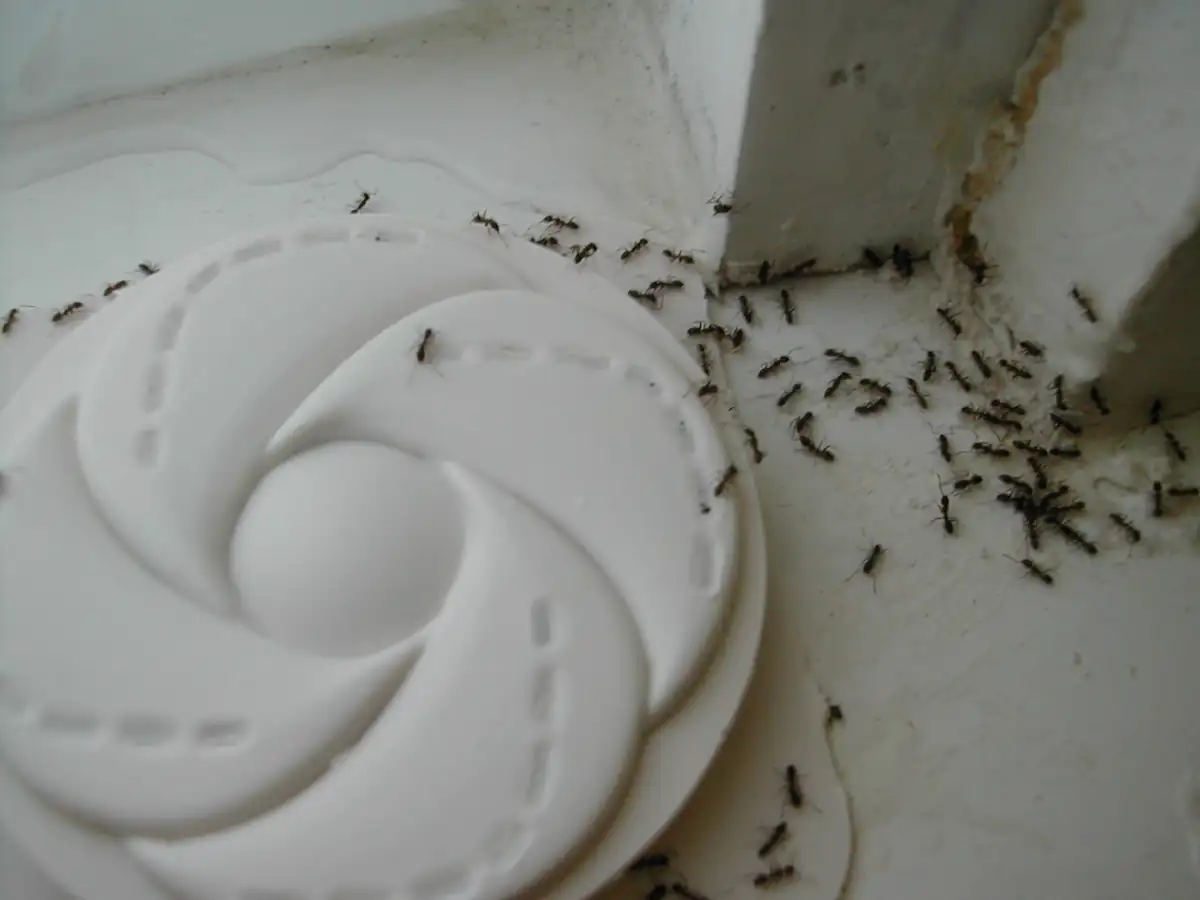

A technician chooses between bait and spray by asking one question: will this product reach the queens? Baits and non-repellent residual sprays are carried or spread back into the colony, so they suit most household ant problems. Repellent sprays kill on contact but push the rest of the colony away, which can spread an infestation. Most visits combine bait inside with a non-repellent product outside, and the mix changes with the species and the place.
The products a technician can choose from
There are five broad kinds of ant product, and each does a different job. Knowing what they are makes it easier to understand a quote and to avoid undoing a treatment with a supermarket can.
| Type | How it works | Typical use |
|---|---|---|
| Gel bait | Slow-acting food the ants carry home | Cracks, voids and behind appliances indoors |
| Liquid bait | Sweet or protein liquid in a station | Busy trails, outdoors and in |
| Granular bait | Small particles workers carry into nests | Garden beds, lawns, nest entrances |
| Non-repellent spray | Ants walk through it without noticing and spread it | Entry points, paths, foundations |
| Repellent spray or dust | Kills or blocks on contact | Limited spots, voids where labels allow |
Why bait reaches the nest
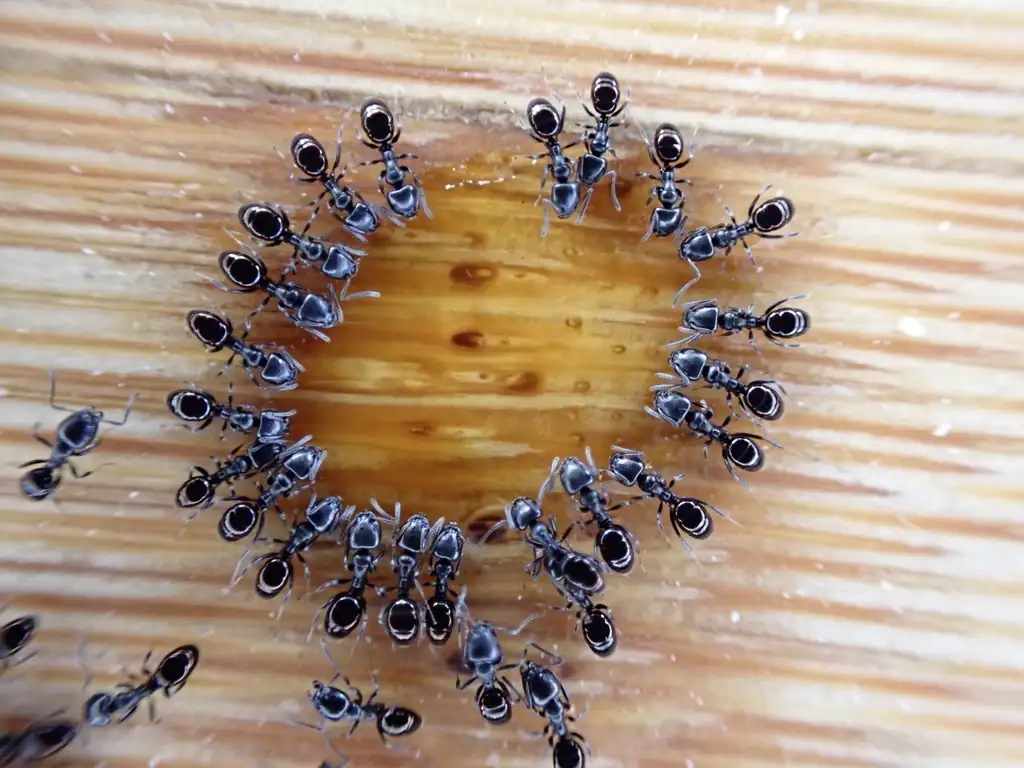
Bait works because worker ants share food. A forager picks up a slow-acting bait, carries it home and passes it to other workers, larvae and queens. Because the bait doesn't kill quickly, it has time to spread through the colony before the ants notice anything is wrong. That's how a few drops of gel in a crack can shrink a nest you've never seen.
Bait has limits. It only works if the ants prefer it to other food on offer, so clean benches matter. It also depends on the species: Landcare Research notes that white-footed house ant workers don't pass food to each other, so baits often fail unless they're placed generously and close to where the ants feed. Landcare's Argentine ant work favours protein-based baits.
Why non-repellent sprays changed ant control
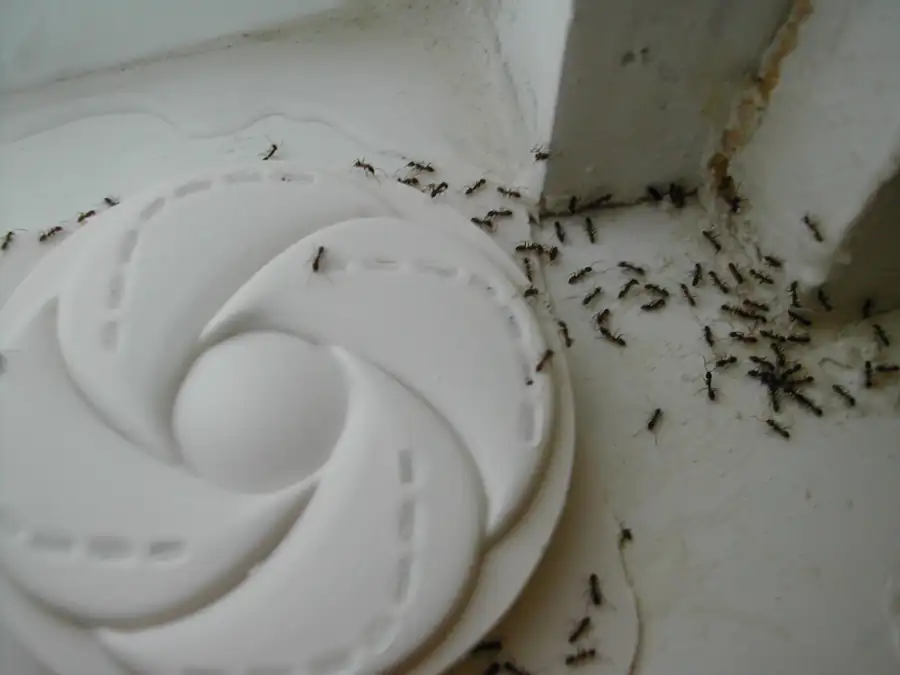
A non-repellent residual spray is applied where ants walk and enter. Ants can't detect it, so they walk through it normally, pick up a dose and carry it back, passing it to nest-mates by contact. Landcare Research describes products of this kind used against Argentine ants. They suit entry points, path edges and the base of walls where trails cross.
Because they rely on ants walking through them, non-repellent sprays go on travel routes, not across whole lawns or inside living areas. Many are trade products that, depending on the substance, must be applied by or under the guidance of a qualified person under the EPA rules.
Where repellent sprays still fit
Repellent sprays kill ants on contact and leave a barrier other ants avoid. Against a single-queen colony with one nest they can work. Against many-queen species like Argentine ants they tend to split the colony and push trails somewhere new, often into a wall cavity. That's why most technicians use them sparingly, if at all, on household ant jobs.
They still have a place: treating a known, contained nest in a void, or protecting a specific spot after the colony has been dealt with. Dusts are used in some wall voids where the label allows. The detail of why sprays backfire is in why sprays scatter ants.
How species changes the choice
Each common Auckland ant responds differently. Argentine ants need boundary work with non-repellent products plus protein baits, and usually a follow-up. White-footed house ants need generous bait close to feeding spots and often treatment into the wall. Black house ants usually take gel bait well. Darwin's ants are handled like Argentine ants, with attention to the garden.
That's why the technician identifies the species before choosing products. The species pages explain each in more depth: Argentine, black house ants, white-footed in walls and Darwin's.
How the place changes the choice
Where the product goes matters as much as what it is. Kitchens get bait in cracks and closed stations, never sprays on food surfaces. Wall cavities get bait at the exit points and, where labels allow, product into the void, never into power points. Outside, non-repellent products go on paths and foundations, granules in beds. Near water, beehives and vegetable gardens, the choice narrows further.
Children and pets change placements too: stations instead of open gel, and treated outside areas kept off-limits until dry. See pet and child safe treatment.
The rules that apply
Every ant product, trade or shop-bought, is applied to its label directions under the Hazardous Substances and New Organisms Act 1996. Under the EPA's notices, some urban pest management substances may only be used by a person holding a qualification such as the Urban Pest Control strand of the New Zealand Certificate in Pest Operations (Level 3), or under the guidance of one.
You're entitled to ask what products will be used, where, and what the re-entry advice is. A technician should be happy to show you the label. Shop products and labels explains how to read one.
What it costs
The products themselves are a small part of the price; the inspection and placement are what you're paying for. Published Auckland "from" prices run from about $210 to $255 incl GST for one area or a small home and about $340 to $400 incl GST for inside and outside of a typical three-bedroom home. Your price comes in writing after the visit.
Ant control questions
Is bait safer than spray?
Bait placed in cracks or stations exposes people and pets to very little product. Sprays outside are applied to entry points and allowed to dry. Both are safe when used to label directions.
Can I use my own spray between visits?
Please don't. A repellent spray can undo a bait or non-repellent treatment by killing foragers and scattering the trail.
Why did the technician use both?
Bait reaches the colony from where ants feed; a non-repellent product catches ants where they travel and enter. Together they cover more of the colony.
Where these facts come from
Checked 5 November 2026