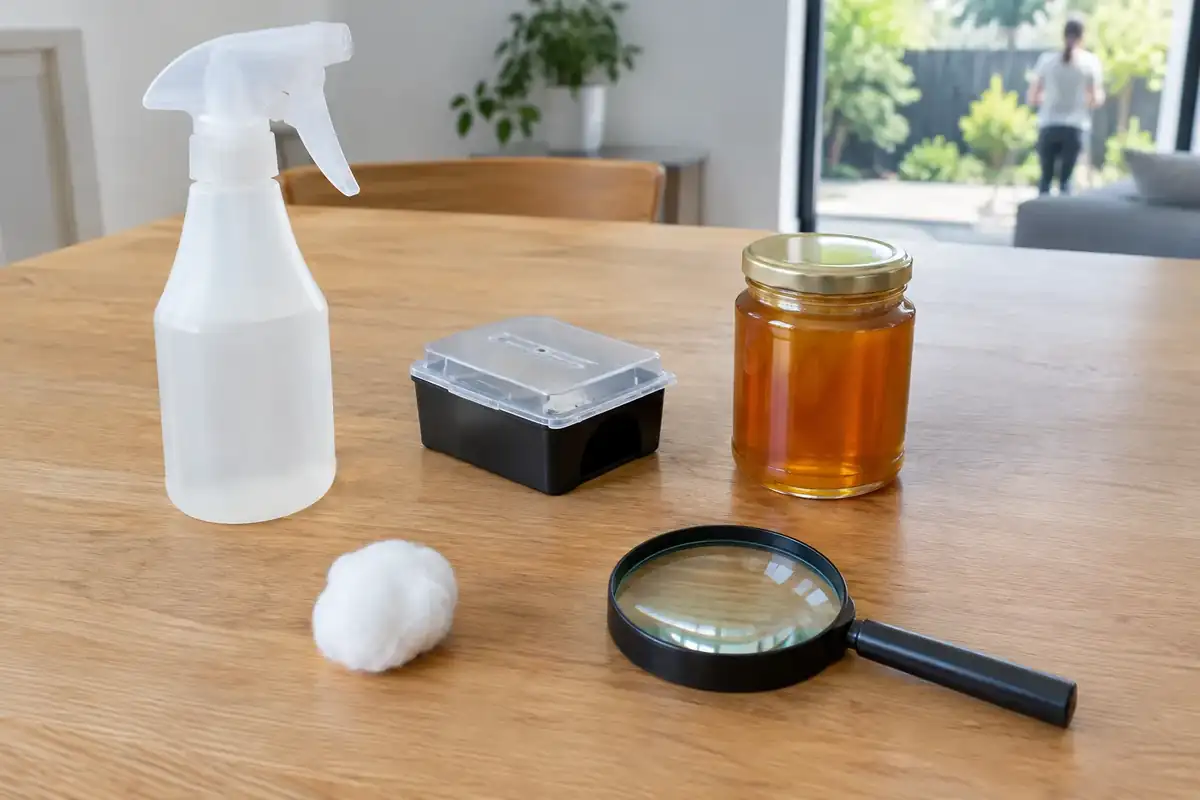
Ant sprays make trails come back because they kill only the workers they touch, while the queens and brood stay safe in the nest. Most household sprays are also repellent, so surviving ants avoid the treated strip and find a new route. With many-queen species like Argentine ants, disturbance can even split the colony into more nests. The result is fewer ants for a day or two and more trails a week later.
What you're actually killing
The ants on your bench are a small fraction of the colony. They're foragers, sent out to find food and bring it home. The queens, eggs, larvae and most of the workers stay in the nest, which may be in a wall, under a path or in the neighbour's garden. Killing foragers is like closing one checkout at a supermarket: the shop keeps running.
A colony replaces lost foragers quickly in warm weather. So the trail you sprayed on Monday is usually back by Thursday, sometimes from a slightly different direction.
Repellents push ants somewhere else
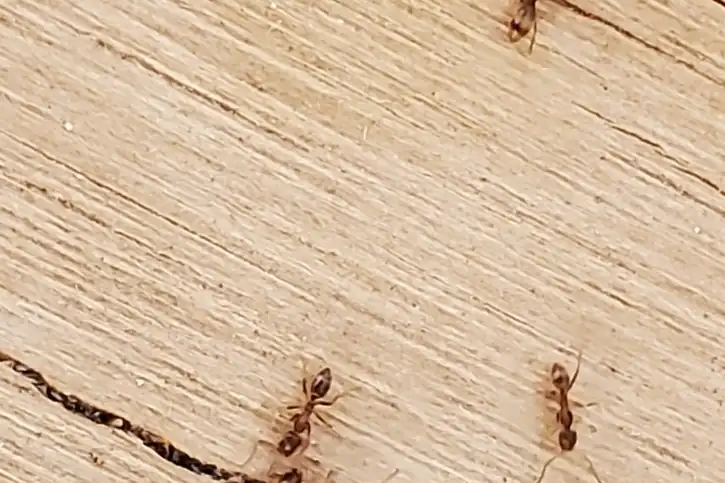
Most supermarket ant sprays leave a residue that ants can detect and avoid. That's useful for keeping ants off a doorstep for a while, but it also means the colony routes around the sprayed area. The trail that came along the skirting now comes up behind the dishwasher, or out of the power point, or through the window frame.
This is how many people end up with ants in their walls. A trail that ran in the open gets pushed into cavities, where it's harder to see and harder to treat. Ants in power points is often the next chapter of a spraying story.
Many-queen colonies split
Some ants have one queen and one nest. Others, including the Argentine ant, have many queens spread across many connected nests. Landcare Research describes Argentine ant colonies budding: a queen and workers walk off and start a new nest nearby. When a nest is disturbed, budding gives the colony a way to survive by spreading out.
So spraying an Argentine ant nest or trail can leave you with more nest sites than you started with. That's general experience among pest controllers rather than a measured figure, but it fits the biology and it's why technicians avoid repellent sprays on Argentine ant jobs.
Why sprays also undo baits
Spraying near bait is the most common way people sabotage their own treatment. Bait works by being carried home and shared. If you spray the trail, the foragers carrying bait die before they reach the nest, and the survivors avoid the bait area. The colony gets a little poison and a lot of warning.
If you've put down bait, shop or professional, leave the trail alone, even when it looks busier for a day or two. More ants at the bait is the sign that it's working.

What works better
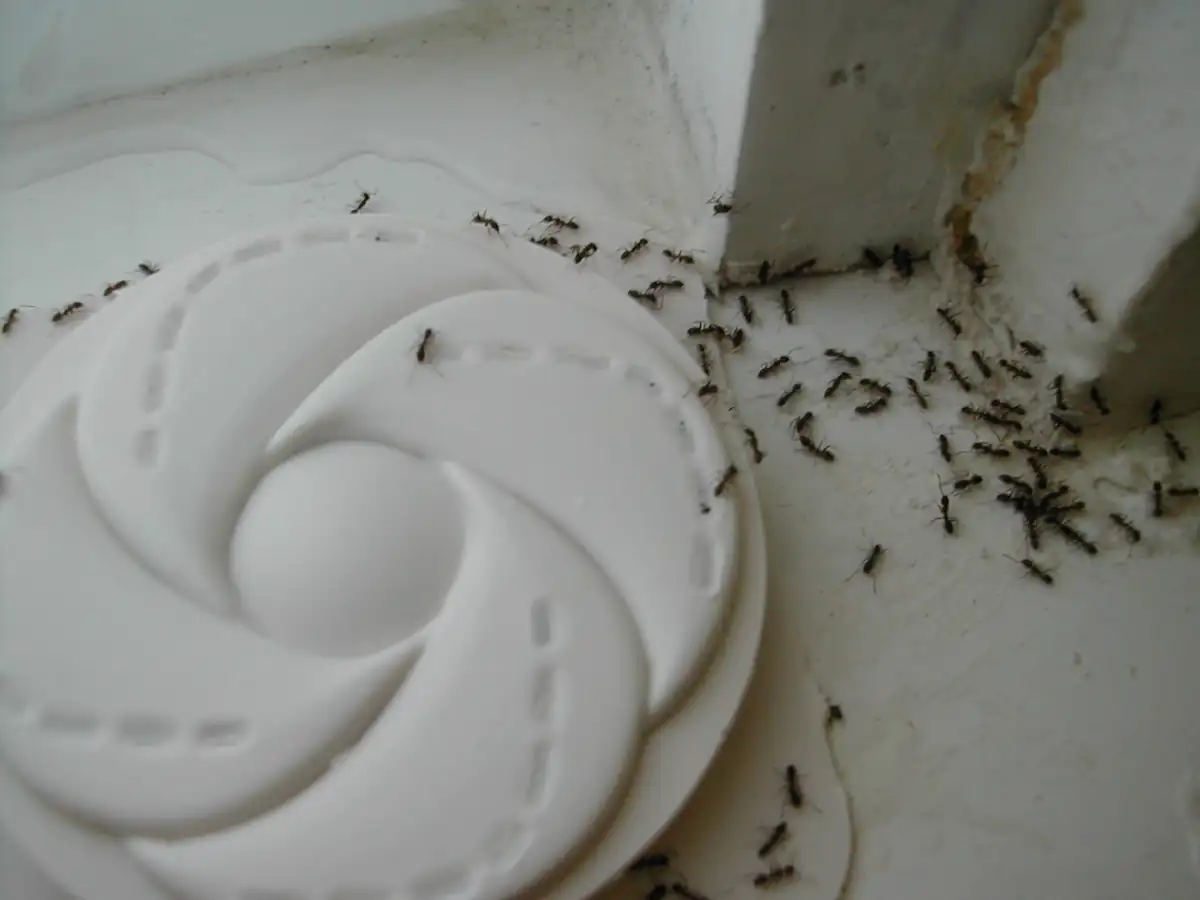
What works is anything that reaches the queens. That means slow-acting bait the ants carry home, and non-repellent products that ants walk through without noticing and spread among themselves. Landcare Research describes both kinds used against Argentine ants, and favours protein-based baits.
The approach also matters. Treating where ants enter and travel outside, rather than where they appear inside, cuts the colony's link to the house. That's why a professional visit starts with the outside. Baiting or spraying explains how the products are chosen.
When a spray does make sense
Repellent sprays aren't useless. A single-queen colony with one obvious nest can sometimes be dealt with by treating the nest directly. A barrier on a doorstep can keep ants out of a room for a short event. And some insects other than ants are best handled with contact sprays.
The trouble is using a spray as the main answer to a recurring trail. If you've sprayed twice and the ants keep coming, the spray isn't going to work the third time.
What to do if you've already sprayed
Stop spraying and give the colony time to settle into steady trails again. That usually takes a few days. Wipe up visible spray residue from benches and food areas with soapy water. Keep the can or packet so a technician can see exactly what was used. Then either try a proper gel bait for two or three weeks with no spraying, or book a treatment.
If you book, tell the technician what you used and where. They may place bait slightly away from the sprayed area, or start outside. When to call a pest controller has the signs that DIY has done all it can. Published Auckland prices for one area or a small home start at about $210 to $255 incl GST.
A note on "natural" sprays
Vinegar, peppermint oil, detergent and similar home sprays work the same way as chemical repellents: they kill or deter the ants they touch and disrupt the trail. They don't reach the nest. They're fine for wiping a bench, but they won't fix a colony, and they can scatter a trail just as effectively as a can from the supermarket.
Ant control questions
Why do I see more ants after spraying?
Surviving ants re-route and new foragers replace the dead ones. With many-queen species, the colony may also bud into new nests.
Is it OK to spray outside but bait inside?
Only if the outside product is non-repellent. A repellent barrier outside can stop ants reaching the bait inside.
How long should I wait before trying bait after spraying?
A few days, until the ants settle back into a steady trail, and away from the sprayed strip.
Where these facts come from
Checked 5 November 2026