An ant colony is a family built around one or more egg-laying queens. Wingless workers find food, care for the young and defend the nest; winged males and young queens leave to mate. Some species, including Argentine ants, have many queens across many connected nests and spread by budding rather than flying. Because the queens and brood stay hidden, killing visible workers rarely ends a problem: treatment has to reach the nest.
Who's who in a colony
Every colony has three kinds of adult. Queens lay all the eggs and can live for years. Workers are sterile females that do everything else: foraging, building, feeding larvae and defending the nest. Males exist only to mate. Te Ara describes winged males flying in swarms with young queens; after mating, queens land, remove their wings and start nests, and males die soon after.
Eggs hatch into larvae, which are fed by workers, then become pupae, the white, rice-like shapes you see when a nest is opened. Most of a colony's population is inside the nest at any time.
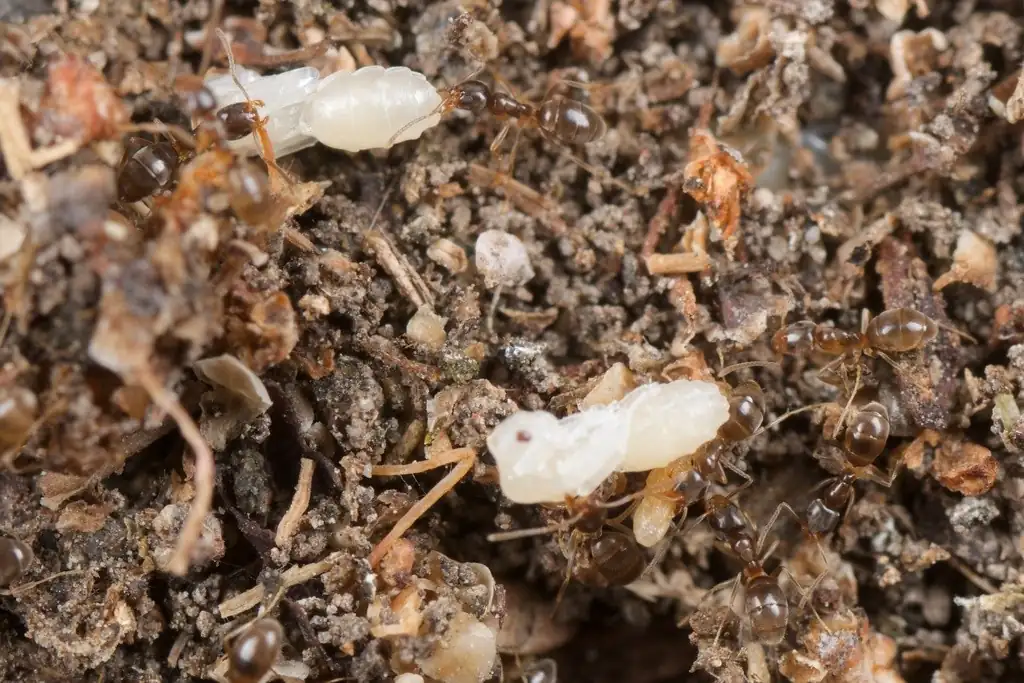
Foragers are a small fraction
The ants you see on a trail are foragers: older workers sent out to find food and water and bring it back. They're a minority of the colony. Kill them and the colony loses a few workers it can replace quickly in warm weather, while the queens keep laying. That's the core reason sprays fail against established colonies. See why sprays scatter ants.
Sharing food
Many ants pass food mouth to mouth, a process that spreads food, and any slow-acting bait in it, through the whole colony including the queens. This is why bait works on species like the black house ant. Not all species do it equally: Landcare Research notes that white-footed house ant workers don't pass food between each other, so baits often fail unless used in large amounts close to feeding sites.
Nuptial flights
In many species, the colony produces winged males and queens once it's mature, and they leave on warm, still days to mate. These are the "flying ants" people see at windows. Most die; a few queens start new colonies. Seeing winged ants indoors repeatedly can suggest a mature colony in the building. See flying ants.
## Budding: spreading on foot
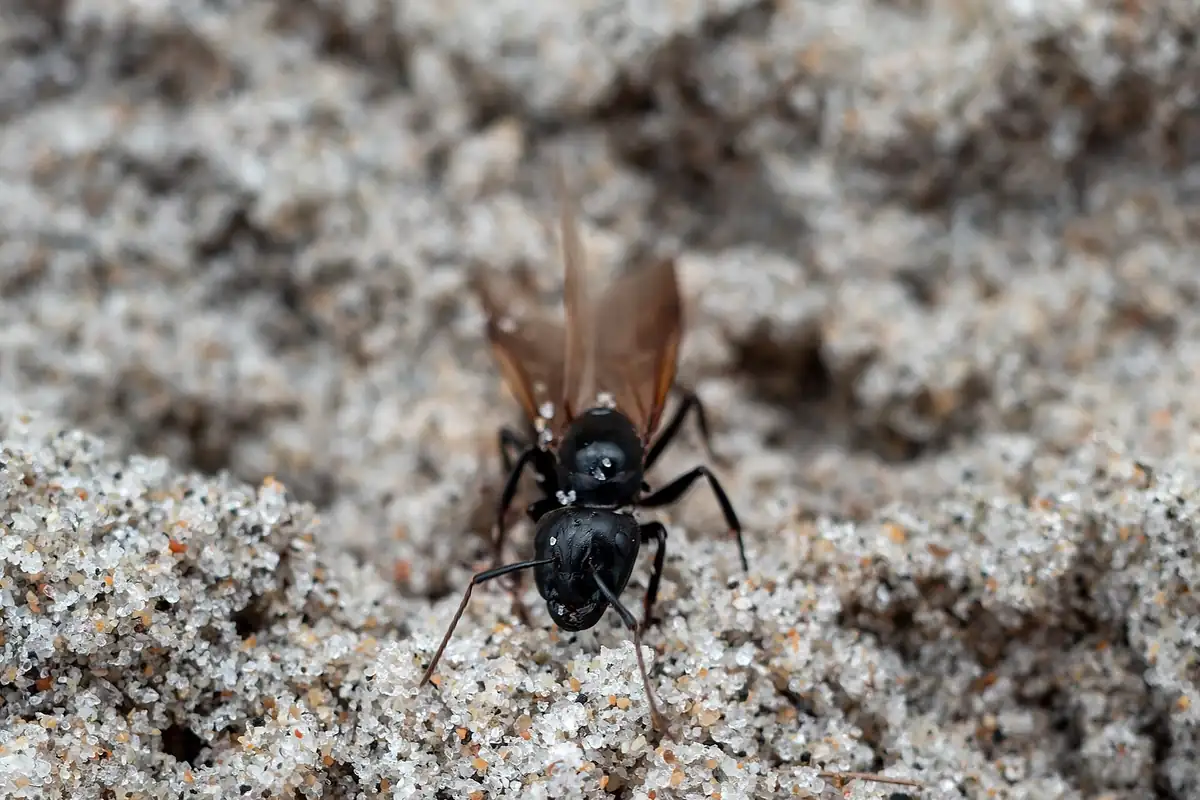

Not every species uses flights. Landcare Research explains that Argentine ant queens don't disperse by flying. Instead, a fertile queen and some workers walk off and start a new nest nearby, a process called budding. Natural spread by budding is about 150 metres a year. White-footed house ants also spread by budding, through wingless reproductives, according to Landcare.
Budding means a disturbed colony can respond by splitting, and that neighbouring nests are often part of the same family.
Many queens and supercolonies
Argentine ants live in colonies with many queens spread across many nests. Workers from neighbouring nests don't fight each other; they behave as one huge colony. In other countries, Argentine ant supercolonies stretch for kilometres. In Auckland, this means the ants on your section are likely connected to those next door.
That's why Argentine ant control focuses on the boundary and entry points, and why neighbours treating together get better results. See Argentine ant control.
What this means for treatment
Every sensible ant treatment follows from colony biology. Use slow-acting products that foragers carry home. Use non-repellent sprays that ants spread to each other. Treat where ants enter and travel, not just where they appear. Expect a follow-up for many-queen species. Don't spray over bait. See baiting or spraying.
Published Auckland prices for one area or a small home start at about $210 to $255 incl GST, and for inside and outside of a typical three-bedroom home at about $340 to $400 incl GST.
Ant control questions
How many queens does a colony have?
Some species have one; Argentine ants have many, spread across connected nests.
How long do ant colonies live?
As long as queens keep laying and new queens replace old ones. Many-queen colonies can persist indefinitely.
Why don't I ever see the queen?
Queens stay deep in the nest, protected by workers. You'll rarely see one unless a nest is opened.
Where these facts come from
Checked 5 November 2026