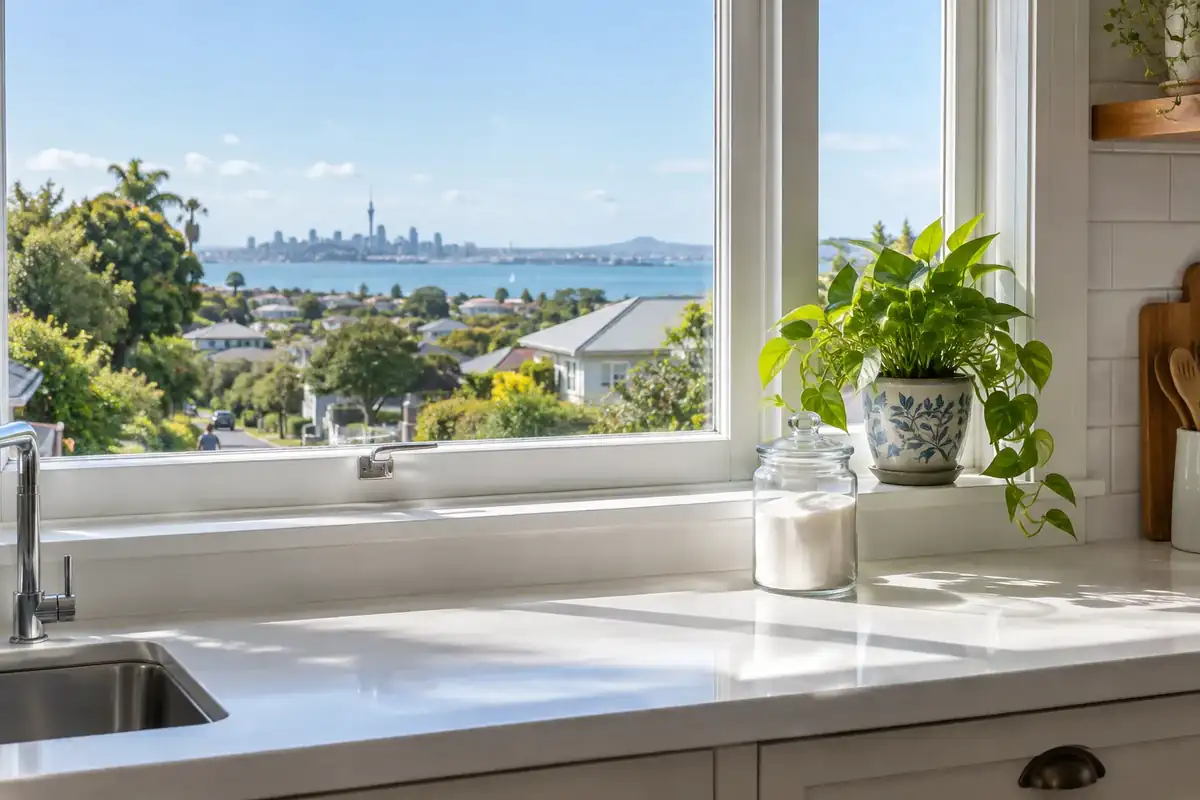
A kitchen ant treatment uses small amounts of bait in cracks, behind appliances and in closed stations, never on benches or food surfaces, and treats the outside of the house where the trail comes in. The ants carry the bait home, so the colony shrinks even though the nest is somewhere else. A technician finds the trail's entry point, identifies the species and places bait where the ants feed but people don't.
Why ants end up in the kitchen
Ants come into kitchens for food and water. Crumbs, sugar, honey, fruit, pet food and the film of grease behind a stove are all worth a long trip to a foraging ant. Sinks and dishwashers provide water. Gaps where pipes come through the wall under the sink, the back of the bench where it meets the splashback, and the space under the oven give ants quiet routes in.
Most kitchen trails start outside. The ants enter at the base of an outside wall, run through the cavity or along a pipe, and appear at the back of a cupboard. Some species, especially white-footed house ants, can nest in the kitchen wall itself. Knowing which is happening decides whether the job is mostly outside or partly in the wall.
Which ants turn up in Auckland kitchens
All four common indoor ants visit kitchens. Argentine ants arrive in long, busy trails, often from the garden. Black house ants make thinner trails along the edge of the bench or the window. White-footed house ants appear around the sink and appliances and may live in the wall. Darwin's ants look like small Argentine ants and smell when crushed.
The species changes the bait and the placement, so the technician identifies it before anything is put down. Telling house ants apart has the field marks if you'd like to check before the visit.
What happens on a kitchen visit
A kitchen visit starts with questions about what you've seen and used, then an inspection of the room and the outside wall behind it. The technician checks under the sink, behind the fridge and dishwasher, along the splashback, inside the pantry and around the window, then goes outside to find where the trail enters. You get a written price before any treatment.
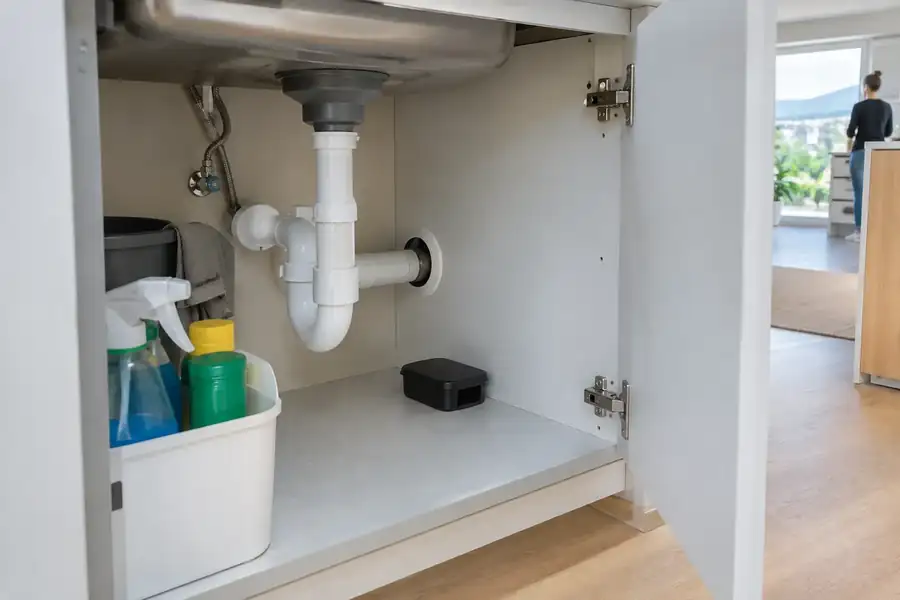
- Bait in cracks and voids. Gel bait in tiny dots in the gap behind the splashback, under the sink at pipe entries, and behind appliances.
- Stations where needed. Closed bait stations where children or pets could reach.
- Outside entry. A non-repellent product at the base of the outside wall and where pipes and cables come in.
- No surface spraying near food. Benches, shelves and food-prep areas are left alone.
Getting the kitchen ready
A little preparation makes the treatment faster and more effective. You don't need to empty every cupboard, but the technician needs to see the back of the under-sink cupboard and the pantry floor, and needs the trail intact.
- Don't spray or wipe the trail with disinfectant for a day or two before the visit.
- Clear the cupboard under the sink and the bottom shelf of the pantry.
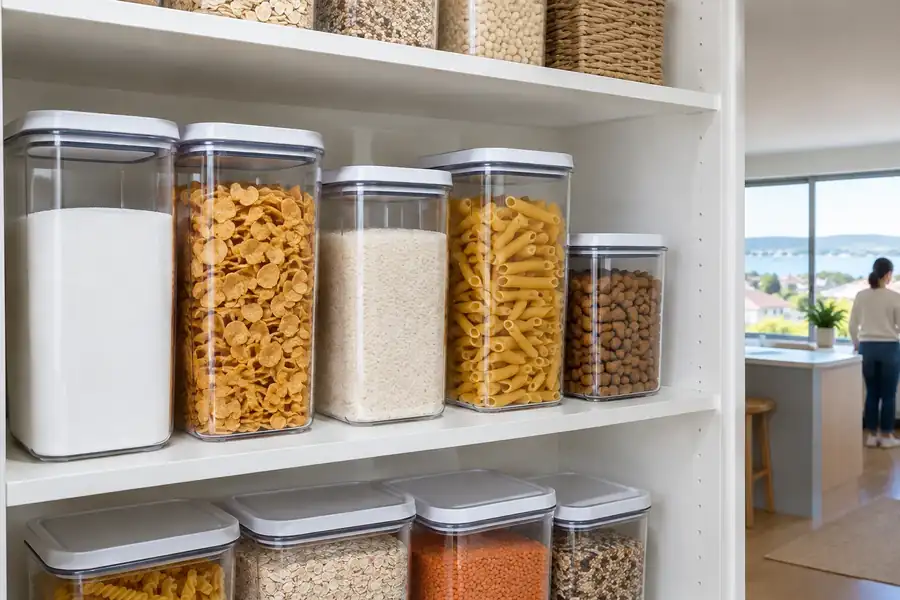
- Put open food in sealed containers or the fridge.
- Keep any products you've used so the technician can read the labels.
- Plan for pets to be in another room during the visit.
Preparing for a treatment has the full checklist.
After the treatment
For the first couple of days you may see more ants, gathered around the bait. That's what you want: they're feeding and carrying it home. Don't wipe the bait away, don't spray the ants, and don't put shop bait next to it. Keep benches clean at night so the bait is the most interesting food in the room.
Numbers usually fall noticeably within a week. If a trail is still busy after two weeks, ask for a recheck; there may be a second nest. After a treatment covers aftercare in detail.
Keeping food and people safe
Kitchen treatments are set up so products sit where food, children and pets don't go. Gel bait goes in cracks and voids in very small amounts, and stations are used where little hands or paws might reach. Every product is applied to its label directions under the Hazardous Substances and New Organisms Act 1996. Ask the technician what they've used and where.
If anyone swallows a pest product, call the National Poisons Centre on 0800 764 766. Families with babies, toddlers or pets should mention it when booking; see pet and child safe treatment and ants and pets.
Keeping them out of the kitchen
Once the colony is under control, a few habits keep ants from coming back. Store sugar, honey, cereal and pet food in sealed containers, wipe benches and the stovetop at night, empty the kitchen bin often, rinse recycling, and fix any drip under the sink. Seal gaps where pipes come through walls once the treatment has done its work.
Outside, keep plants and mulch back from the wall behind the kitchen. Ants farm aphids on shrubs by the back door, and a busy shrub makes a busy trail.
What it costs
A kitchen-only treatment with outside treatment at the entry point sits at the lower end of published Auckland prices: about $210 to $255 incl GST for one area or a small home. If the trails come from all around the house, an inside-and-outside treatment of a typical three-bedroom home is listed at about $340 to $400 incl GST. You get a written price after the inspection.
Sources and what changes the figure are on what ant control costs.
Ant control questions
Do I need to empty the kitchen?
No. Clear under the sink and the pantry floor, cover open food, and leave the trail alone. That's usually enough.
Can I cook after the treatment?
Yes. Bait is placed in cracks and voids away from food surfaces. Follow any specific advice the technician gives for the products used.
Why are there more ants after the visit?
They're feeding on the bait and carrying it to the nest. Numbers rise briefly and then fall.
Where these facts come from
Checked 5 November 2026