
Heavy rain floods ant nests in soil, under pavers and in garden beds, so colonies move workers, brood and queens to higher, drier ground, which is often your house. A sudden trail the morning after a downpour can be a temporary evacuation that settles once the ground drains. If the trail is still busy a week later, the colony has found a comfortable home inside, and it's time to treat.
What rain does to a nest
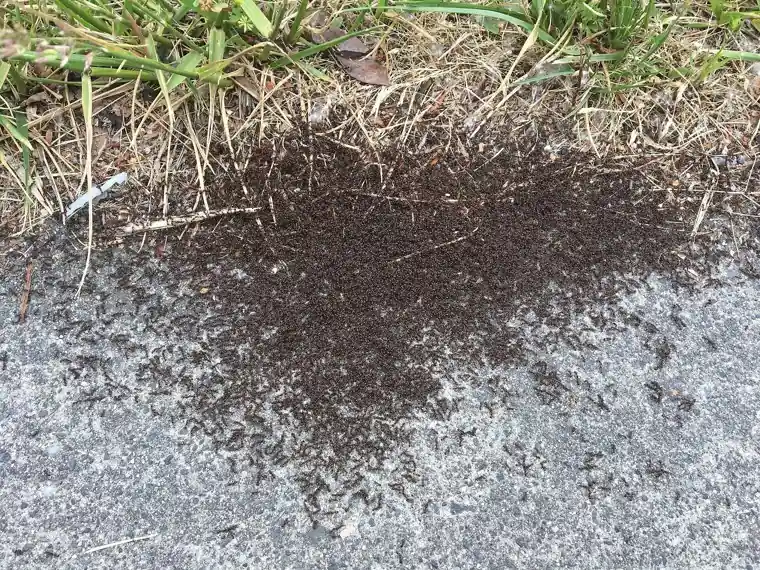
Most outdoor ant nests in Auckland are in soil, under paving, beneath pot plants or along the base of walls. When the ground saturates, chambers fill with water and the colony has to move. Workers carry eggs, larvae and pupae to safety, and with many-queen species like Argentine ants, queens move too. Wall cavities, sub-floors and the space under a kitchen cabinet are perfect refuges.
Clay soils, common across much of Auckland, drain slowly, so flooded nests stay flooded for longer. Low-lying properties, those at the bottom of a slope and sections with poor drainage see the most dramatic indoor surges.
Signs it's an evacuation
An evacuation trail has a particular look. The ants arrive in a hurry, often carrying white brood, and may cluster in a dry corner rather than heading for food. They often appear somewhere unusual, like a lounge skirting or a bedroom, near the outside wall closest to the flooded nest.
These trails usually fade within a few days as the ground dries and the colony moves back out. Wiping up the clusters with a damp cloth and leaving the rest alone is often all that's needed.
Signs it's become an infestation
If the trail settles into a steady line to food or water and keeps going a week after the ground has dried, the colony has stayed. Ants carrying brood into a wall or under a floor, winged ants appearing from the same spot, or trails at power points and light fittings all suggest a nest has moved indoors.
That's when a treatment is worth booking. When to call a pest controller lists the other signs.
Don't spray the evacuation
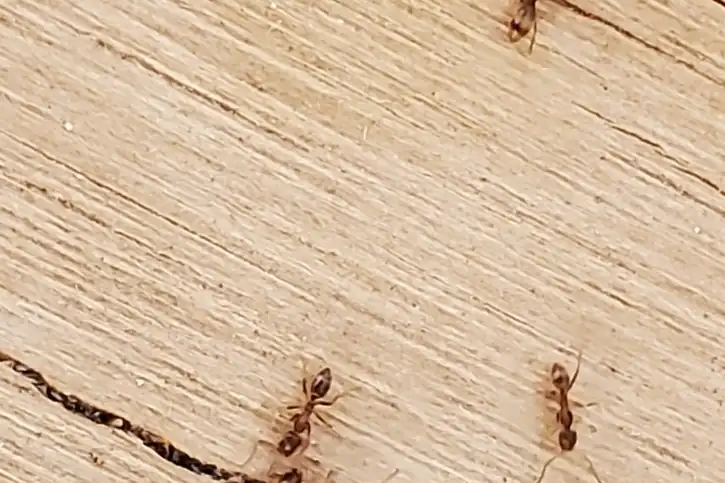
Spraying a rain-driven trail is tempting, but it tends to backfire. Repellent sprays push ants deeper into wall cavities rather than back outside, which is exactly where you don't want them. With Argentine ants, disturbance also encourages colonies to split. See why sprays scatter ants.
Instead, keep food sealed, wipe up clusters, and watch for a few days.
What the trail tells you
An evacuation trail is a free map of your house's weak points. Wherever the ants came in after rain is a gap they can use any time. Note the spot: a door threshold, a crack at the base of a wall, a gap where a pipe comes through, the edge of a sliding door track. Those are the places to seal once the colony is dealt with, and the places a technician will treat outside.
After a treatment
Heavy rain can wash away some outdoor treatment products, particularly on hard surfaces. If a storm hits within a day or two of an outside treatment, mention it to the technician; part of the work may need redoing. Bait inside the house and in stations is unaffected. A short surge of ants after a storm doesn't necessarily mean the treatment failed.
Reducing the problem next time
Better drainage around the house reduces both flooding and ant evacuations. Keep gutters and downpipes clear, make sure ground slopes away from the walls, clear soil and mulch away from weatherboards, and fix low spots where water pools against the house. Garden beds hard against the wall are prime nest sites that flood easily.
When to call
If trails persist after the ground dries, or you're seeing ants after every rain, a treatment that targets the outside entry points and the nests nearby is usually the answer. Published Auckland prices for one area or a small home start at about $210 to $255 incl GST, and inside and outside of a typical three-bedroom home at about $340 to $400 incl GST. See lawns, paths and pavers for outdoor work.
Ant control questions
Why do ants come in before it rains?
Many people notice ants indoors as weather changes. Pressure and humidity changes may play a part, but the reliable driver is flooded soil.
Will the ants leave on their own?
Evacuation trails often fade within days. A trail that's still busy a week later probably won't.
Should I put bait out after rain?
If the trail settles to a steady line to food, bait can help. Don't spray at the same time.
Where these facts come from
Checked 5 November 2026