
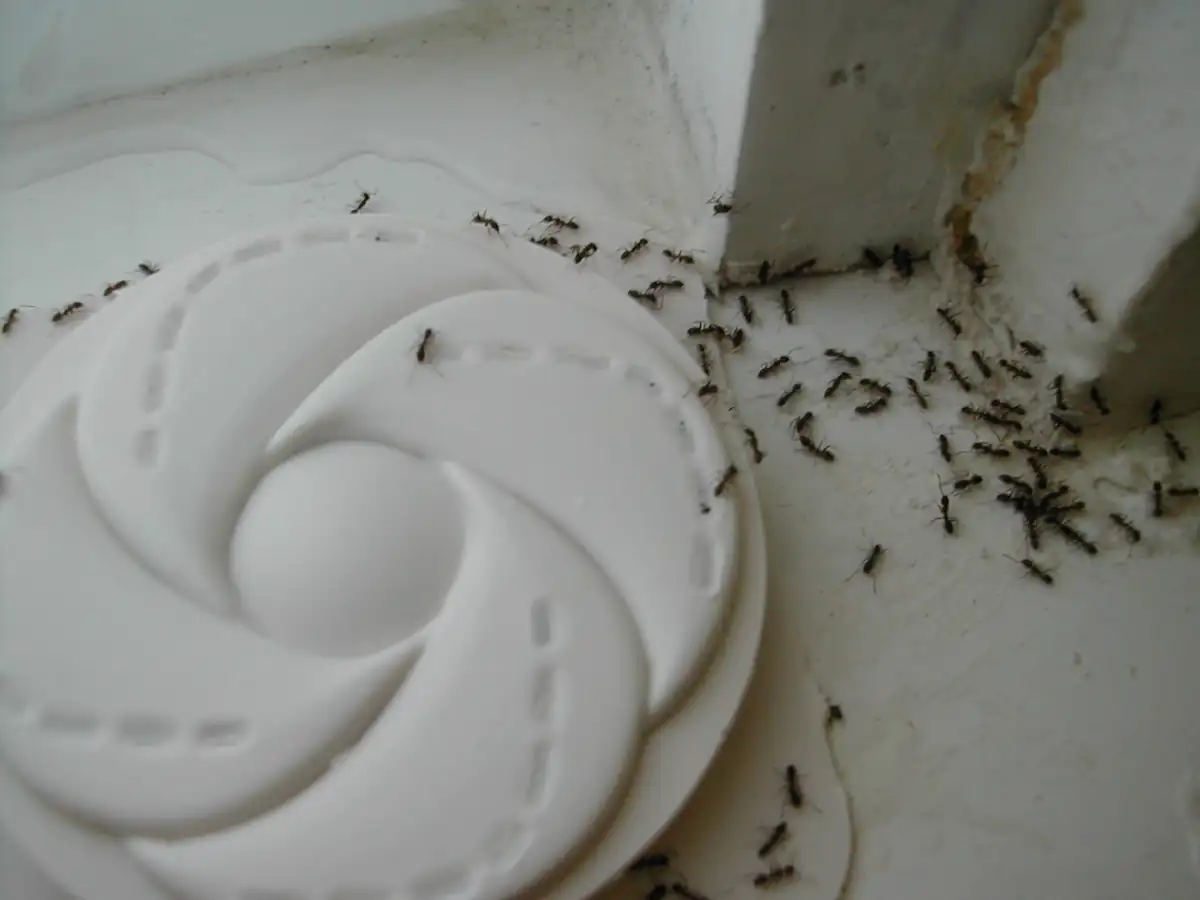
Most ant treatments show a clear drop in numbers within one to two weeks. For the first day or two you may see more ants, gathered at the bait, because slow-acting products need to be carried back and shared through the colony. Argentine and white-footed house ant jobs often need a follow-up visit a few weeks later. If a steady trail is still going after about two weeks, ask for a recheck.
Why treatments are slow on purpose
Professional ant products are designed to act slowly. A bait that killed ants instantly would never reach the nest; the foragers would die at the bench. Instead, workers eat the bait, carry it home and pass it to other workers, larvae and queens before it takes effect. Non-repellent sprays work the same way: ants walk through, pick up a dose and spread it by contact.
That delay is the whole point. It's also why a treatment can look like it's failing in the first 48 hours.
Day by day: the first week
The first week follows a fairly predictable pattern, though weather and species shift it a little.
| Time after treatment | What you'll usually see |
|---|---|
| Hours 1 to 24 | Ants find the bait; trails may get busier around placements |
| Days 2 to 3 | Heavy feeding at bait; scattered ants away from usual routes |
| Days 4 to 7 | Trails thinning; fewer ants at the bench; bait less busy |
| Week 2 | Most trails gone or much weaker in a typical house |
Weeks two to six
By the second week most single-colony problems, such as black house ants in the kitchen, are largely resolved. Argentine ant jobs are different. The first treatment knocks out the active trails and nearby nests, but nests that budded off, or trails from next door, can reappear around weeks three to six. That's why a follow-up is usually built into Argentine ant quotes.
White-footed house ants are slower still. Landcare Research notes their workers don't share food, so bait has to reach more individual ants. Wall-nest jobs can take several weeks and often need a second round of bait.
What speeds it up or slows it down
Several things change the timeline, and some are in your control. Warm weather speeds feeding; a cold, wet week slows it. Other food competes with bait, so clean benches and sealed food help. Spraying slows everything, because it kills bait-carriers and scatters trails. A large section or heavy neighbourhood pressure means more ants arriving from outside.
The best things you can do: leave the bait alone, don't spray, keep food sealed, and don't clean away outside treatment for a day or two. After a treatment has the full list.

The follow-up visit
A follow-up is a planned second visit, usually two to six weeks after the first, to treat new trails, budded nests and any area the first visit didn't reach. It's standard for Argentine and white-footed ants and occasional for other species. Ask when you get the quote whether a follow-up is included, and what it costs if not.
Reading an ant quote explains what to look for. Published Auckland "from" prices for inside and outside of a typical three-bedroom home are about $340 to $400 incl GST.
When to ask for a recheck
Ask for a recheck if a steady trail is still going strong after about two weeks, if ants appear in a new part of the house, if winged ants emerge from a wall, or if heavy rain washed through soon after an outside treatment. Note where and when you see ants, and take a photo; it helps the technician target the recheck.
Seasonal timing
Timing through the year matters as well. Treatments in spring, before colonies reach their summer peak, tend to clear faster and last longer. Landcare found spring baiting around early October works as well as summer baiting. A treatment in January is fighting a colony at full strength, so it may need the follow-up sooner.
See Argentine ant season for the calendar.
How long the result lasts
How long a property stays clear depends on what's next door. A house with no neighbouring infestation can stay clear for a long time. A house in an Argentine ant hotspot will see ants test the boundary again next spring. That's not the treatment failing; it's new ants arriving. A yearly spring treatment keeps on top of it.
Ant control questions
Why are there more ants the day after treatment?
They're feeding on the bait and carrying it home. Numbers rise briefly, then fall.
Can I clean the floors after a treatment?
Clean normally, but avoid wiping away bait placements and don't mop along outside treated strips for a day or two.
How do I know if the treatment failed?
If a steady trail is still going after about two weeks with no spraying and food sealed, ask for a recheck.
Where these facts come from
Checked 5 November 2026