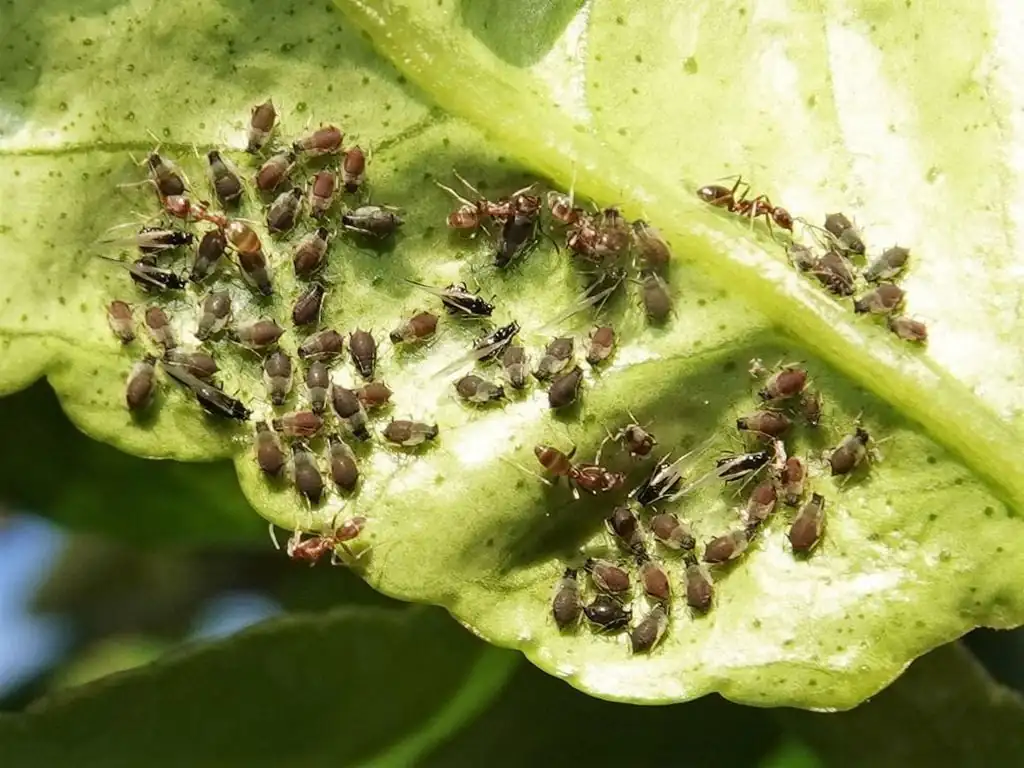
Ants climb citrus, roses and other plants to collect honeydew, the sugary waste produced by aphids, scale insects and mealybugs. In return the ants protect those sap-feeders from ladybirds, lacewings and parasitic wasps, so infestations grow. Black sooty mould then grows on the honeydew. Auckland Council lists both Argentine and Darwin's ants as protecting horticultural pest insects. Controlling the ants lets natural predators clean up the plant.
What the ants are doing
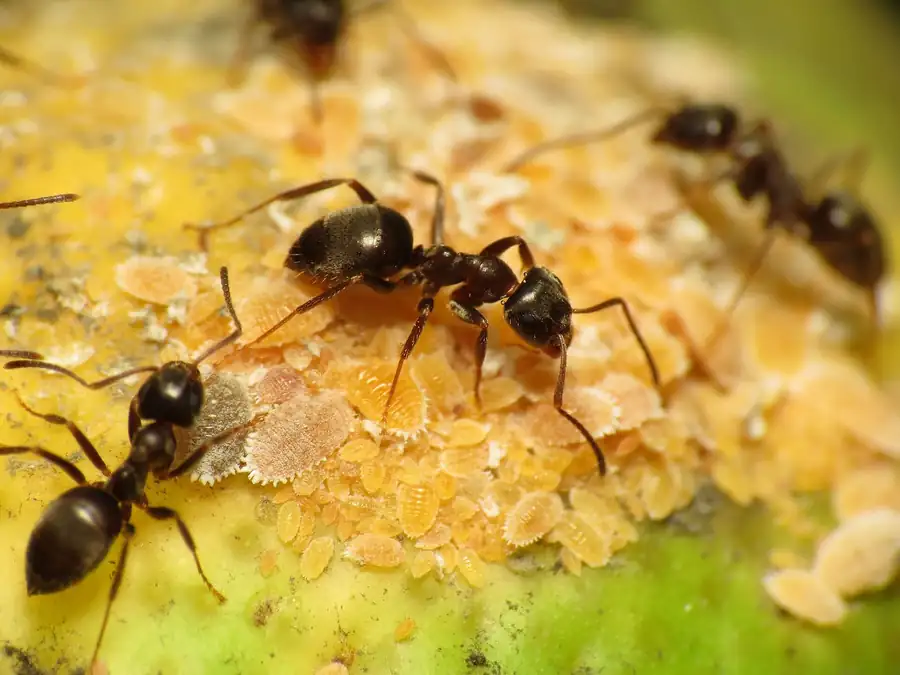
Aphids, scale insects and mealybugs feed on plant sap, which is rich in sugar but poor in protein. They excrete the excess sugar as honeydew. Many ants, Argentine ants among them, collect honeydew as a major food source, tending the sap-feeders the way a farmer tends a herd: guarding them, moving them to fresh growth, and driving off predators.
The relationship is good for the ants and the sap-feeders and bad for the plant. Auckland Council's pest profile for the Argentine ant lists protecting horticultural pest insects among its impacts, and its Darwin's ant profile says the same species encourages large numbers of aphids and scale insects.
Signs on your plants
You'll often notice the ants before the insects they're tending. Look closer if you see any of these.
- steady ant trails up a trunk or stem, especially on citrus, roses, feijoa or hibiscus
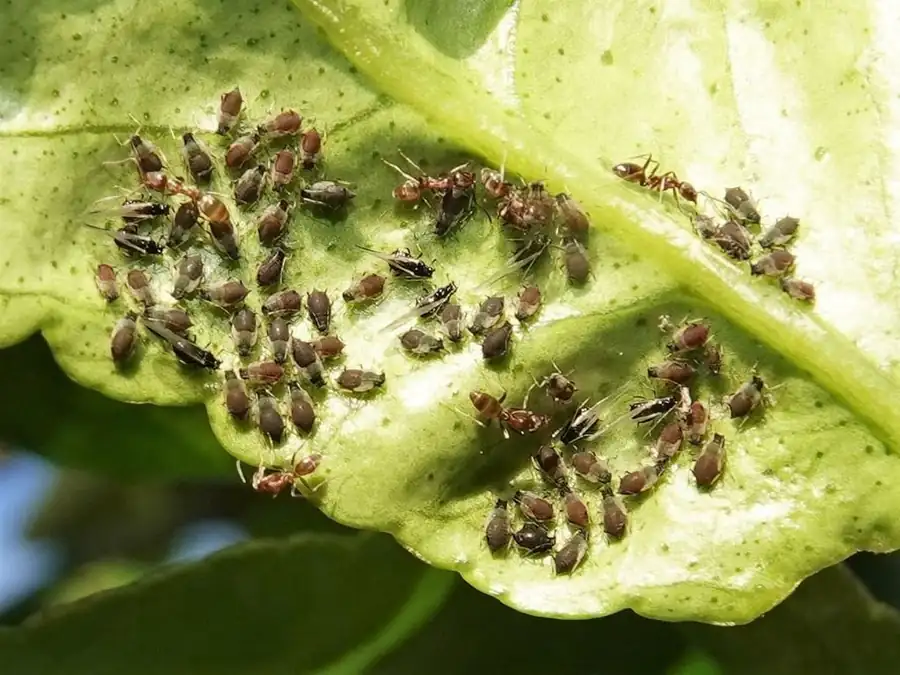
- clusters of small green, black or grey aphids on new shoots and buds
- flat or domed scale insects stuck along stems and leaf veins
- white, waxy, cotton-like mealybugs in leaf joints
- sticky leaves, or leaves and fruit coated in black sooty mould
## Sooty mould

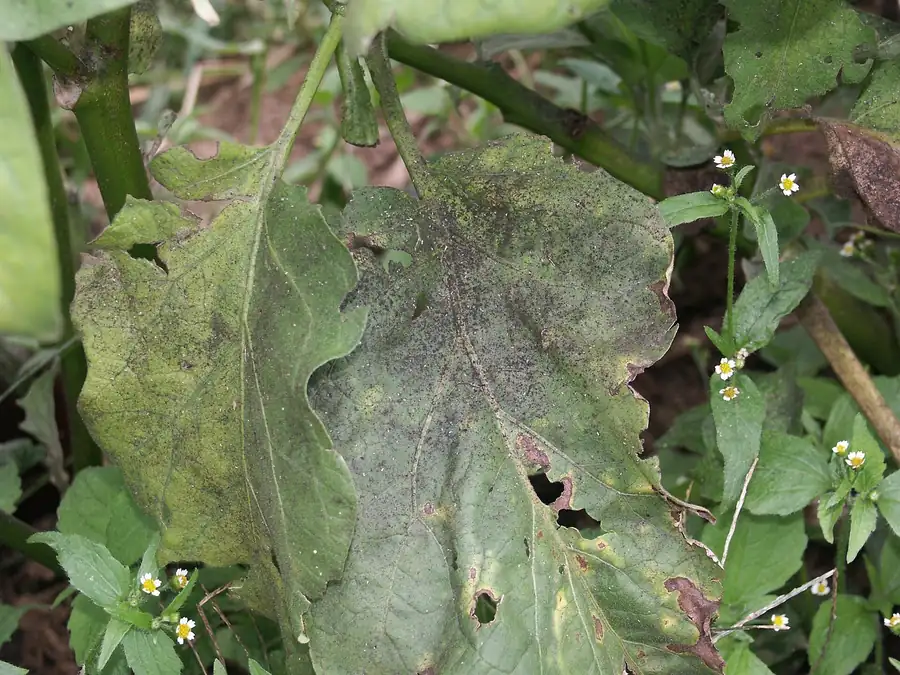
Sooty mould is a black fungus that grows on honeydew, not on the plant itself. It looks dramatic, coating leaves, fruit and even paving under trees, and it blocks light from the leaves, which weakens the plant over time. Wiping it off doesn't solve anything while the honeydew keeps coming. Remove the honeydew source and the mould dries and flakes away.
## Why controlling the ants helps

Gardeners often treat the aphids or scale again and again without noticing the ants. Once the ants are kept off the plant, ladybirds, hoverfly larvae, lacewings and tiny parasitic wasps can reach the sap-feeders, and their numbers usually fall without much more intervention. That's general horticultural experience rather than a cited figure, but it's why many growers treat ants first.
Keeping ants off a tree
The aim is to stop ants climbing, not to spray the tree. Options include sticky bands around the trunk (kept clear of bridging leaves and stakes), pruning branches that touch fences, walls or other plants so the trunk is the only route up, and treating the ant trails and nests at ground level with bait or granules. Avoid spraying insecticide on flowering plants, which harms bees, and on fruit you'll eat.
When it's a whole-garden problem
If ants are farming insects on several plants, the colony is usually large and spread through the garden, often Argentine or Darwin's ants. A technician treats nests and trails in the beds and along paths and fences, placing bait or granules at ground level away from flowers and edible plants, and keeping products away from drains and ponds. See lawns, paths and pavers.
Published Auckland prices for one area start at about $210 to $255 incl GST, and inside and outside of a typical three-bedroom home at about $340 to $400 incl GST. Garden-heavy jobs may sit higher; you get a written price after the visit.
Bees, birds and the wider garden
Many gardeners keep bees or want to attract birds, so heavy spraying defeats the point. Argentine ants also rob beehives, according to Auckland Council, and interfere with biological control of pest plants. A targeted approach, treating ants at ground level and leaving flowering plants alone, protects the rest of the garden. See ants around chickens and beehives.
Prevention for next season
Ants and sap-feeders both surge with spring growth. Avoid over-feeding plants with high-nitrogen fertiliser, which produces soft new growth aphids love. Check new shoots weekly in spring, put sticky bands on citrus before ants start climbing, and consider a spring ant treatment if the garden had heavy trails last summer.
Ant control questions
Will killing the aphids get rid of the ants?
Not usually. Ants find other honeydew sources and protect new aphids. Treating the ants is the more lasting step.
Is sooty mould harmful to eat?
Wash fruit well. The mould grows on honeydew on the surface and can be wiped off once the source is controlled.
Which ants farm aphids in Auckland?
Argentine and Darwin's ants are the main ones, both listed in Auckland's pest plan for this reason.
Where these facts come from
Checked 5 November 2026